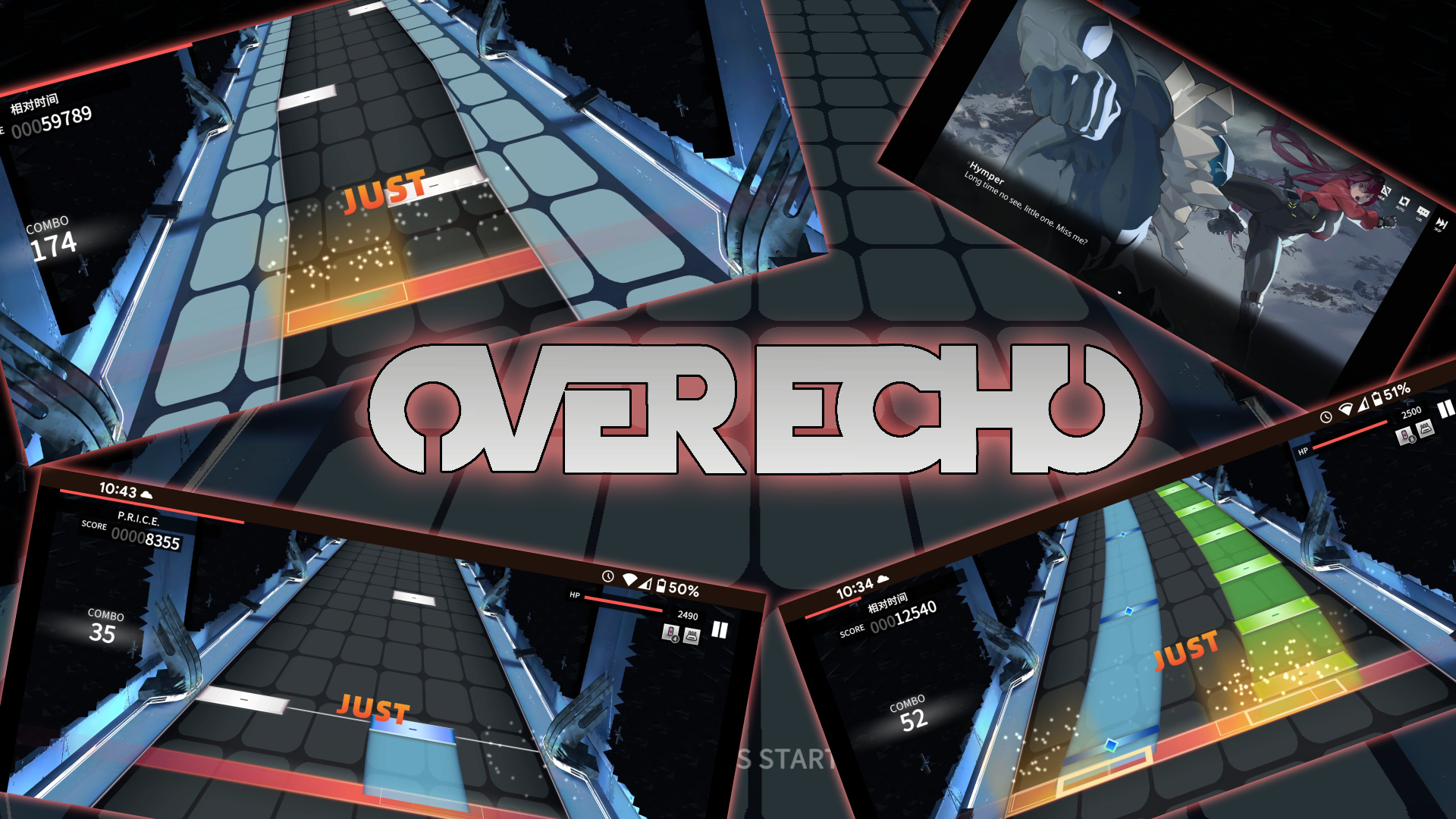

I haven’t put a lot of time into rhythm games since Elite Beat Agents was new almost 20 years ago, but there will always be a soft spot in my heart for the genre. Even though Guitar Hero and Rock Band have disappeared from the zeitgeist, rhythm games themselves haven’t, with surprise hits like Beat Saber and Crypt of the NecroDancer popping up from time to time. OverEcho, one of the newest rhythm games on Android and iOS, probably won’t be a genre-defining surprise, but it’s still a decent $2 purchase to while away the hours.
OverEcho has the right rhythm
Where OverEcho really succeeds is in being a rather fun rhythm game. Everything starts off pretty easily as the mechanics are introduced (tap, hold, swipe), but there’s a lot of room for any player here since each level has five difficulty levels. I found the lowest levels (<4) to be too easy, but the challenge can ramp up very quickly since mid levels (5–7) can either be a jam-inducing delight or a spirit-crushing, finger-breaking nightmare, and it’s not always clear how it’s going to turn out.
For the most part, the parity between the music and the gameplay feels really good. There are a few songs where I felt the beat didn’t match the gameplay, but that was the exception and mostly showed up on slower songs that had the challenge pared down to a minimum. On the more upbeat songs (which are entirely Asian pop, mostly led by female vocalists), the gameplay feels really good (when you’re not losing at least!) and it’s easy to fall into a groove.
Where OverEcho misses the mark
The biggest gripe I have is about the story. Maybe it’s good, but I found it impossible to connect to. Perhaps it’s because I’m a Gen X gamer and I don’t connect to the Mihoyo-inspired character design, or maybe it’s because the story is delivered almost entirely in dialogue from avatars that are just gently moving sprites, a la idle characters in a Final Fantasy game. And to get the story, you have to put up with this for five minutes between each level. I don’t mind reading, but the story is all “tell” and no “show.”

Another issue I ran into is that the game does a bad job of explaining itself. The tutorial level was acceptable and explained the mechanics, but I still don’t fully understand everything that’s happening in the busy UI or in the menus. There are unused item slots available without any items to put in them. It doesn’t help that the UI seems to be designed for tablets over smartphones because I can’t read jack. Again, this may be a Gen X problem, but fine print has no place in mobile game design.
Is OverEcho for you?
If you like rhythm games, there’s a lot to love here. OverEcho has 28 tracks available out of the gate, and an additional five can be purchased for around $4 in in-game credits. The marketing team on Discord says they plan to have music DLC available on a monthly basis as well, so if you’re a rhythm-game whale, there should be content for you going forward. It’s also worth mentioning that while this is a paid title, the story is incomplete. The team plans to release future story chapters episodically for free, but time will tell on that front.

If you’ve never played a rhythm game before, there might be better places to start that aren’t trying to be story-driven. OverEcho also demands you register an account with them (and it’s kind of a pain in the ass), so if you don’t feel like giving your email to an up-and-coming studio, you should probably pass on this as well. Finally, this is a rhythm game, so music is foundational to the experience. If you don’t often play with headphones or in a place where you can listen to music without distractions, you won’t be able to really enjoy your time to the fullest.
Having said all of that, I’m still having plenty of fun. If you like drop-style rhythm games similar to Kalpa or Pianista, there’s probably something here for you.
| Developer | Genre | Price |
| PRWave | Drop-down rhythm | $2.99 |
The gameplay is a solid 8 for me, but I abhor tiny text and lazy storytelling. Thankfully, the story is ancillary to the heart of the game, and it’s easy to skip through the cutscenes and get back to the rhythm.