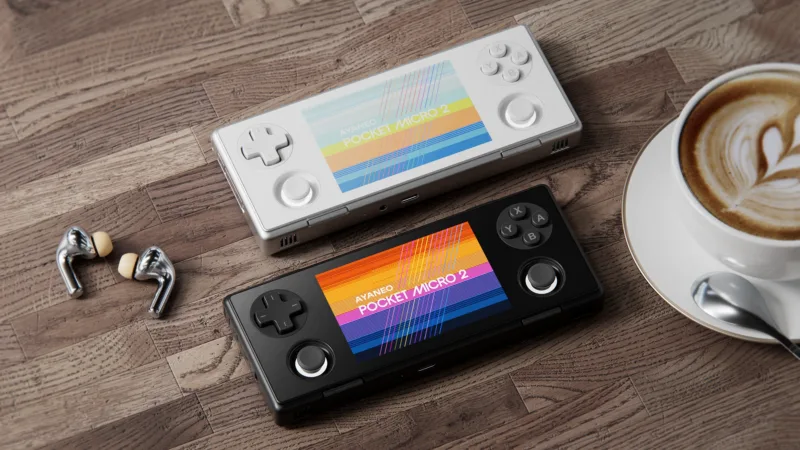

The switch from mass-market AirPods and consumer-grade headphones to IEM land is one of my fondest memories. I’ve rarely dabbled with prohibitively expensive headphones and earbuds, but even gear south of, say, $200 can give the Beats and the Skullcandys of the world a run for their money. I’ve followed the Chi-Fi audio scene for half a decade now and tried everything from upstarts to fan favorites, but there are some headphones that truly stand out. They may look mainstream on paper, but the experienced reality far exceeds what the graphs lead you to believe, and I call them the underdogs. The quiet successes enjoyed by those in the know but chucked aside as uninspiring or dull by most. Kiwi Ears has created some great sets over the years, but the Cadenza is a squarely budget-focused IEM that rips up the spec sheet in your face the moment you hit Play.
I mean that in the best way possible. I like to think of myself as one of those rare, humble, self-professed audiophiles who grew up understanding good sound, and that opinion is what makes something truly enjoyable. Moreover, penning how something sounds into words is quite like a theory class in swimming. You don’t learn jackshit until the water’s up your nostrils. With that declaration out of the way, the Cadenza looks like your average mainstream in-ear with warm tuning that appeals to the bass-yearning masses without bleeding into the mids and giving you tinnitus from shouty treble. I said it rips up the spec sheet because it does all the aforementioned with such grace and flamboyance; it took me a minute to find the kinks in the sparkly resin armor. But all is not perfect, and I’m here to lay it bare.
Pricing and specs: Affordable and feature-rich
The Cadenza comes in attractive yet compact packaging
The Kiwi Ears Cadenza is available on Amazon US and through most prominent audio gear retailers as well. You can also purchase directly from the Kiwi Ears website, but they were consistently sold out for the period in which I tested them and wrote this article. The price typically hovers around the $30-35 mark. The spec sheet seems vanilla on paper, but the performance, like most IEMs, holds its own against big-name-brand earbuds.
Specifications
| Driver configuration: | Single 10mm Beryllium dynamic driver on each side |
| Cable: | 4-Core braided copper cable with 3.5mm 90-degree plug and 0.78mm 2-pin connectors for IEMs |
| Inline mic: | No |
| Frequency response: | 20Hz-20KHz |
| Impedance: | 32 Ohm |
| Wearing style: | In-ear |
| Weight: | 21g |
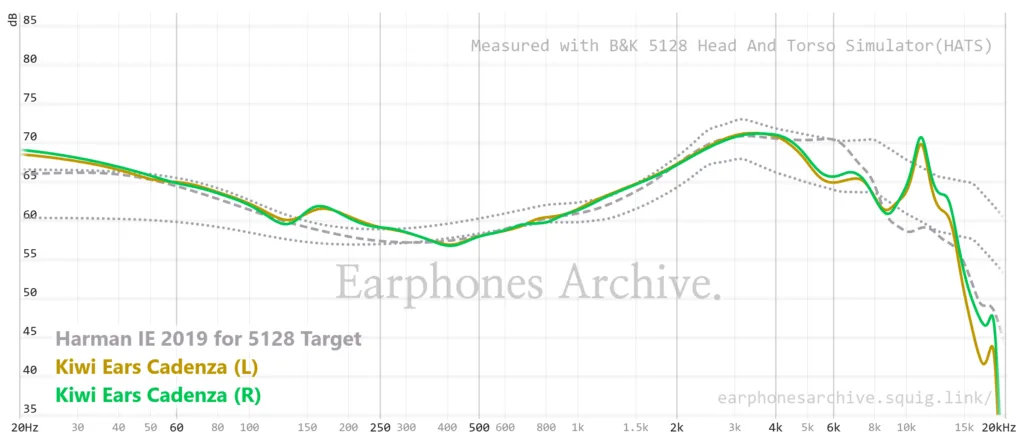
A graph comparing the frequency response of the Kiwi Ears Cadenza IEM against the 2019 Harman Target curve
Built better than the KZs

Box contents include a generous selection of eartips
Audio is no different from gaming: you really get what you pay for. Chi-Fi has defied that presumption for a long time, but right around $50 is the line that separates utter garbage from tolerable sets. Unlike prior models, Kiwi Ears’ new Cadenza certainly aims to score a win under that threshold dominated mainly by hordes of KZ and CCA IEMs, with a few other noteworthy players emerging from the muck. I tested the Cadenza’s collab edition with Headphone Zone, an Indian audiophile store that’s also worked with other Chi-Fi brands such as DDHiFi and Tangzu. I’m told the tuning remains largely unchanged from the standard Cadenzas, with customization only for the packaging and shell logos.
The included cable is dark and rubbery, with clear, pre-curved sleeves forming the earhooks. In using the IEMs, I found this cable notoriously tangle-prone and grippy. There’s no inline mic either, but the 90-degree 3.5mm jack and additional sleeving on the earhooks are a nice touch, like the cable manager. Nonetheless, upgrades are the first order of business if you plan to step out wearing these IEMs. The 2-pin connectors allow using plenty of options from Kiwi Ears and other brands, so long as you’re well aware there’s no sound quality advantage on the table, even when terms like “oxygen-free” are thrown around for marketing.

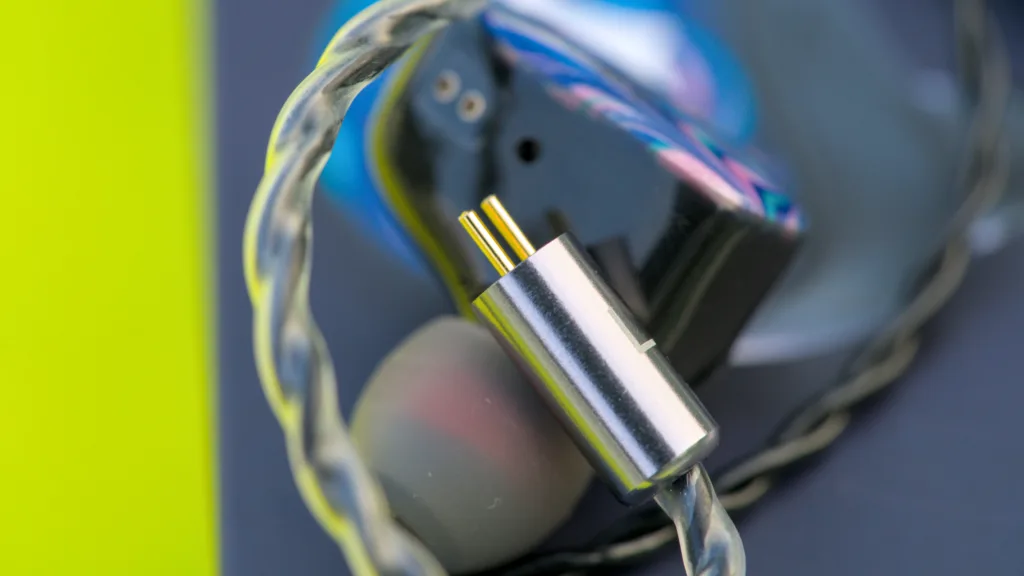
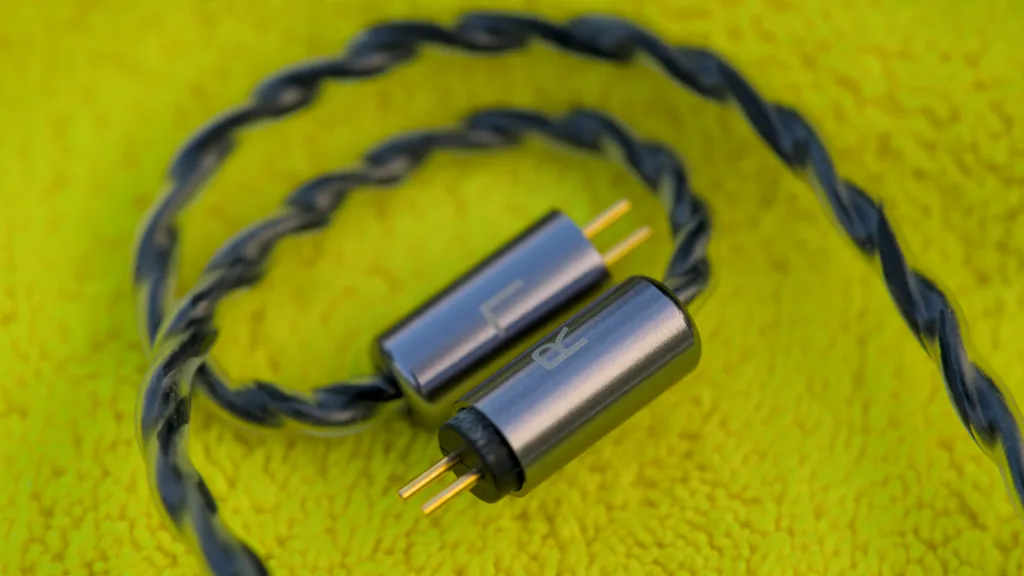
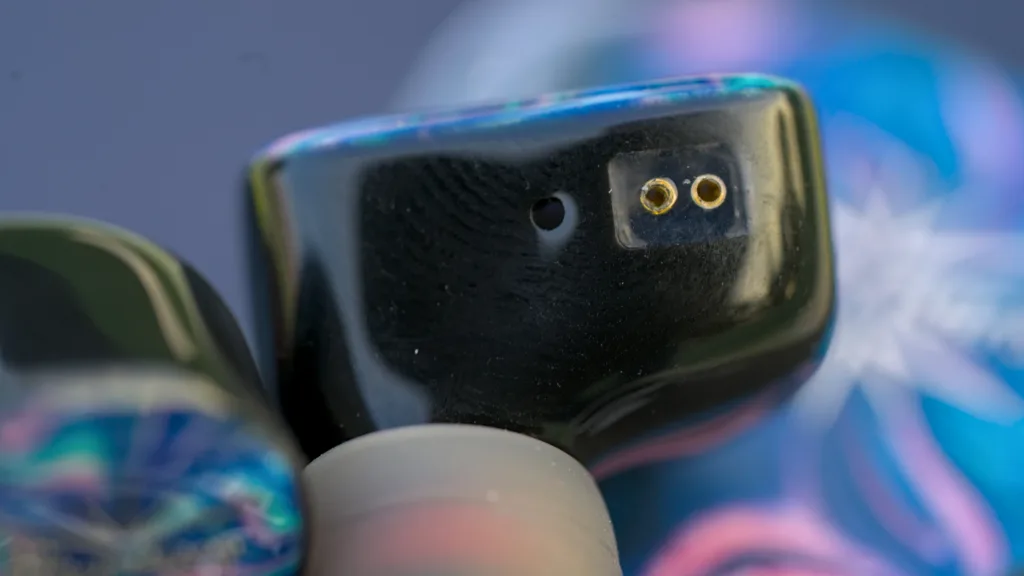
Detachable cables aren’t great, but they open up a great upgrade path for superior comfort
In the ear, I didn’t forget that I was wearing the Cadenzas, but they are light enough that longer listening sessions spanning a few hours don’t hurt my ears. The standardized nozzle diameter allows the use of memory foam eartips for a better seal and passive isolation. I’d say it fits small ears well, despite the conventional IEM shape. If you’re still worried about a secure fit and comfort, other options like the BLON BL-03 remain a safer bet with similar tuning.
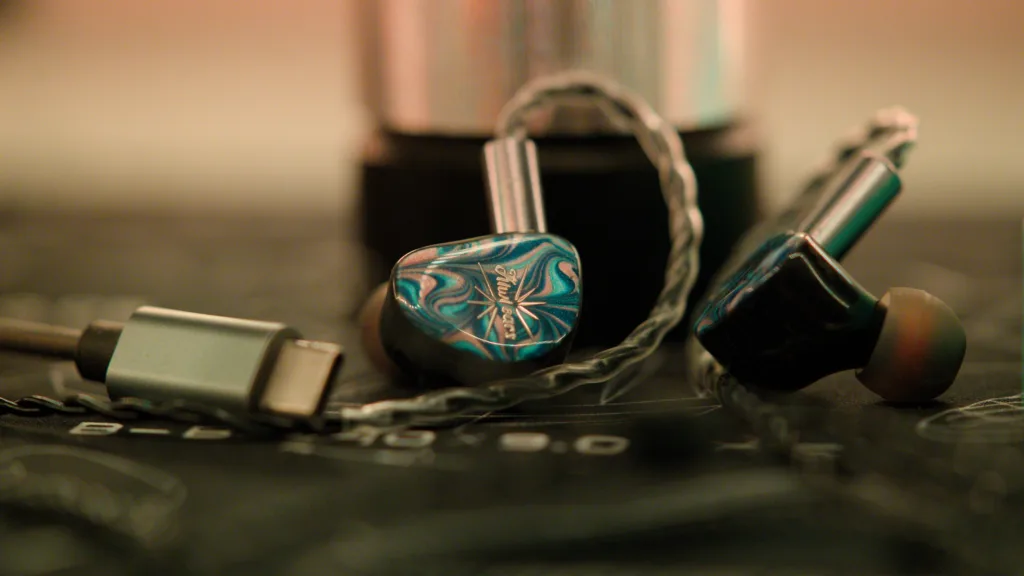
Cadenza sure looks the part

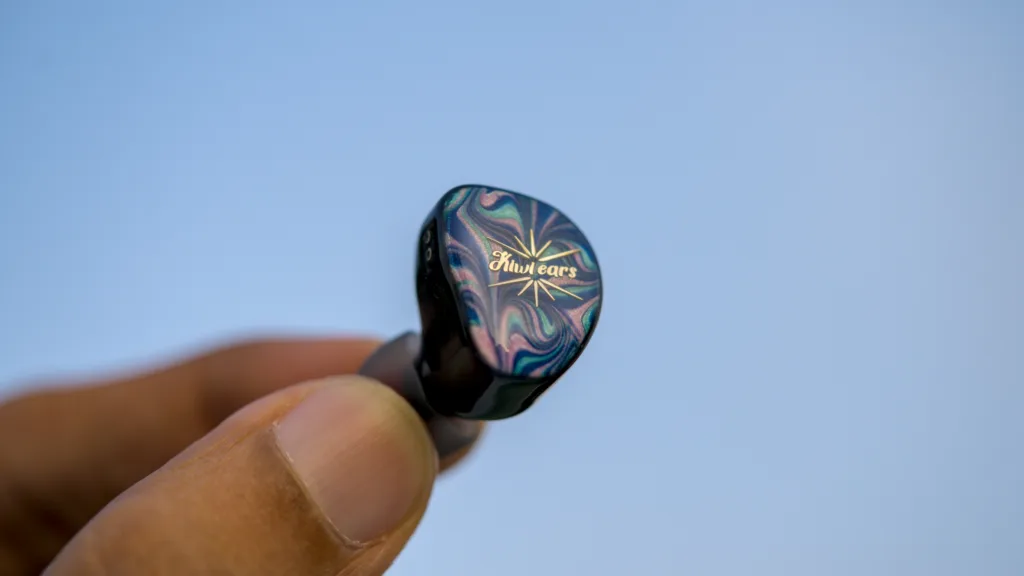

Although tiny, these buds have some amazing shine in the faceplate
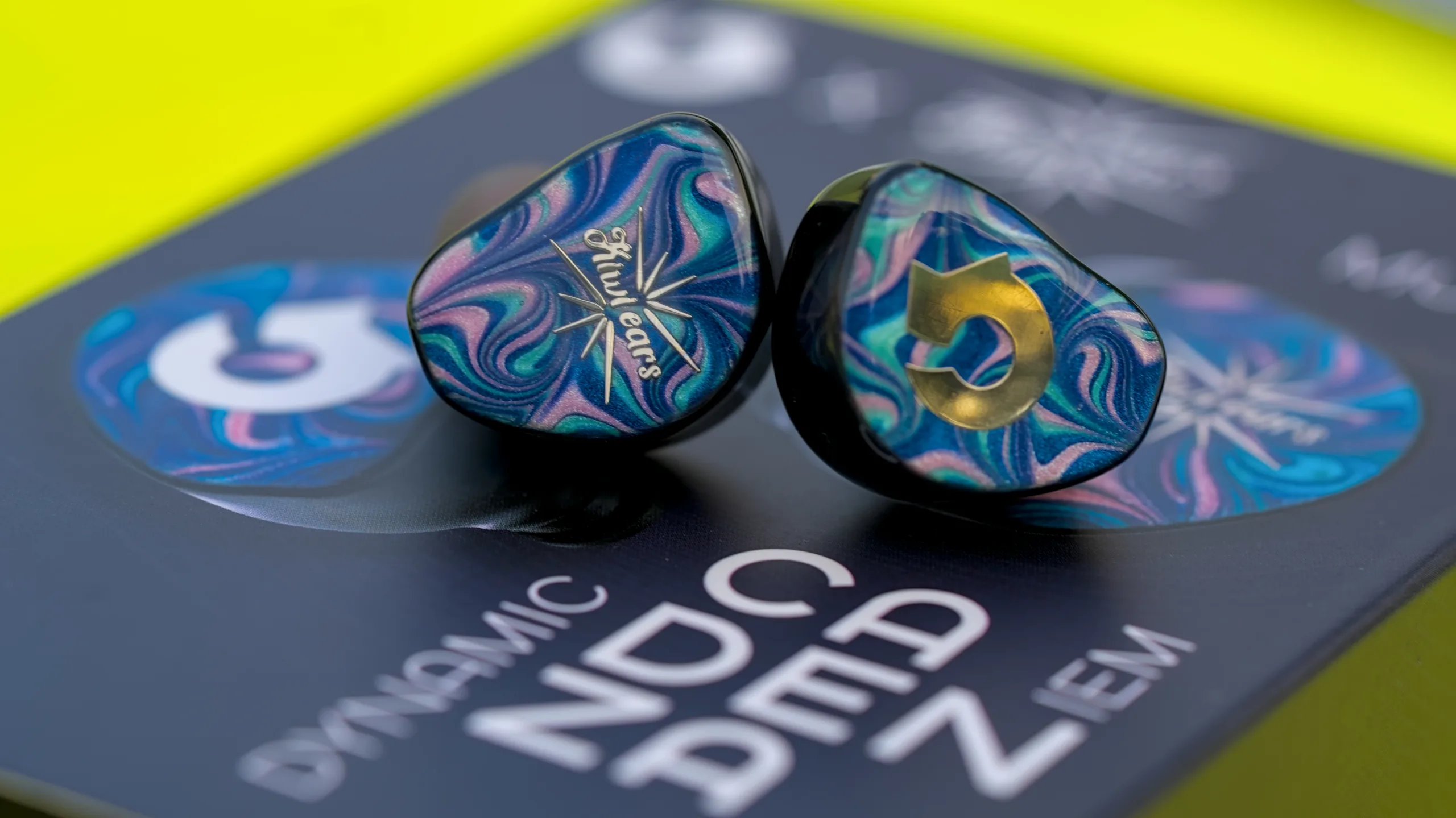
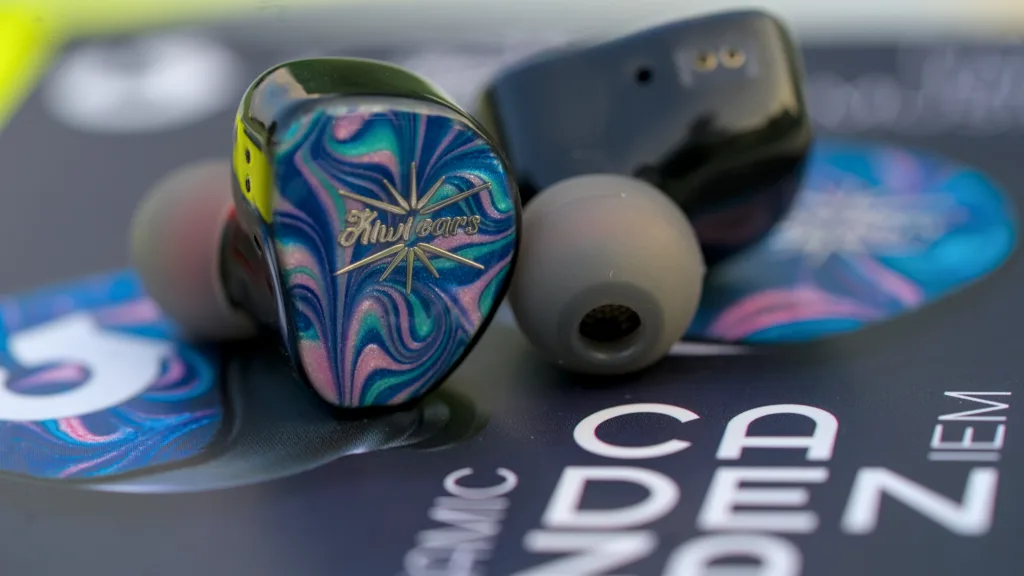
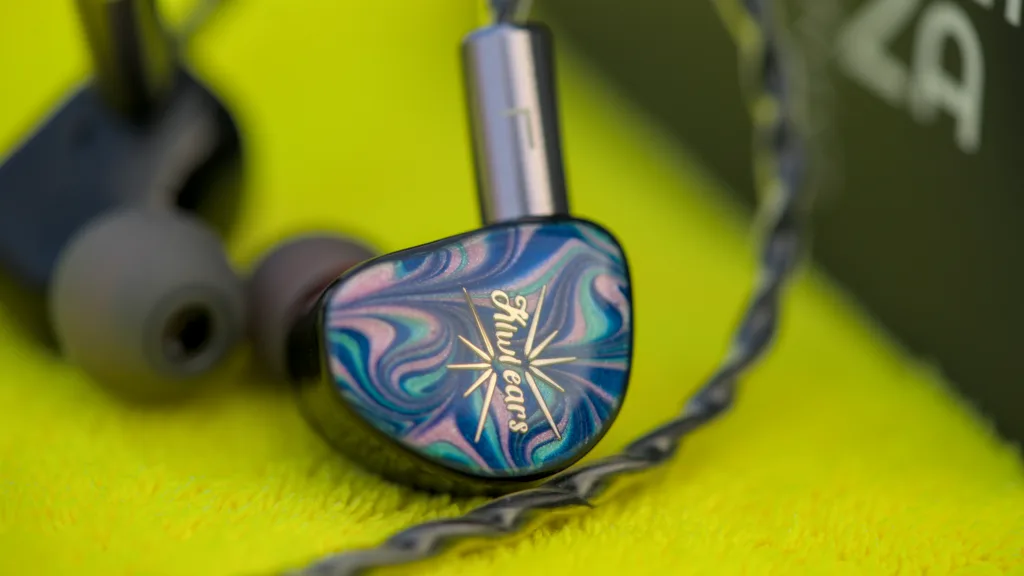
Right from the unboxing experience, the Cadenza’s resin shells stand out. They are a mix of swirly and glittery green, purple, and blue that glimmer with sophistication when the sunlight hits just right. Resin is a rarity at this price point, but Kiwi Ears made the right call here because the overall weight is way lower. Reduced fatigue in longer listening settings is a direct benefit. For added comfort, the package includes three types of eartips and three pairs of each, so you’ll find your perfect pair easily. They are decently pliable, offering good isolation on par with other silicon tips. While slipping the eartips on, I noticed shiny metal grills where the nozzle terminates — another brilliant touch from a longevity standpoint, given the fragility of adhesive nylon mesh.
The fit is good for moderate-size ears, but you’ll still be very aware of these IEMs if your ears are smaller. They stick out a fair bit, so I don’t mind how the flat front plate with bright colors helps contain visual bulk. Just like the vast majority of gear this side of $100, the Cadenza is made entirely of resin, which is a great lightweight material for customized forms without coloring the sound significantly like a metal driver enclosure. It even has a couple of vent holes on each side, so the bass has volume and sound is airy, too. This brings me to the crux of the matter — sound.
An agreeable sound signature packing tight bass and smooth treble
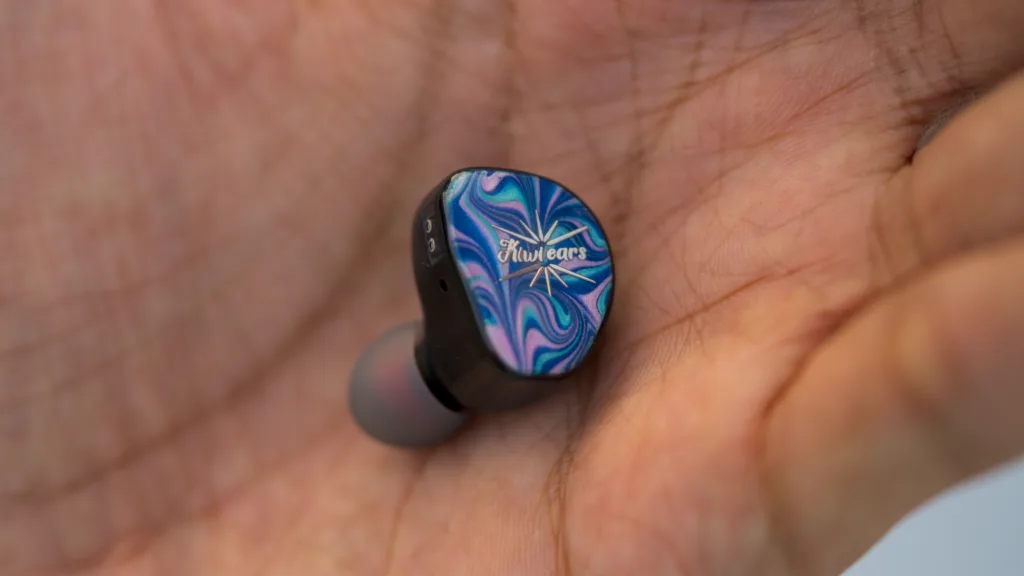
The Cadenza is a great, pocketable size
The sound signature of the Kiwi Ears Cadenza is to die for. I love how it strikes the perfect balance between an appealing V-shaped signature without the eardrum-tickling shrill tones you’d find in KZ IEMs at the same price. The tuning stays close to the 2019 Harman target curve — at least on paper — but I found a strong emphasis on bass in my testing. Typical sub-bass tracks, such as Rumble by Skrillex, revealed an absence of the boomy low end that bleeds into everything else. It’s no surprise either, because drivers need to move a lot of air for that, and the effect is most pronounced in speakers.
I can celebrate the quality of the mid-bass, though, since it does all the heavy lifting with tight, quick performance that doesn’t affect double-pedal percussion in rock and jazz. In short, it absolutely slaps. I came into this experience with tempered expectations, not expecting an IEM to be an absolute bass cannon, but the Cadenza’s mid-bass comes really close to a proper studio headphone like the Sennheiser HD series. As such, the tuning is perfect for the cinematic rumble bass in tracks like Lifting The Veil, with the thunder that makes movies enjoyable, too.
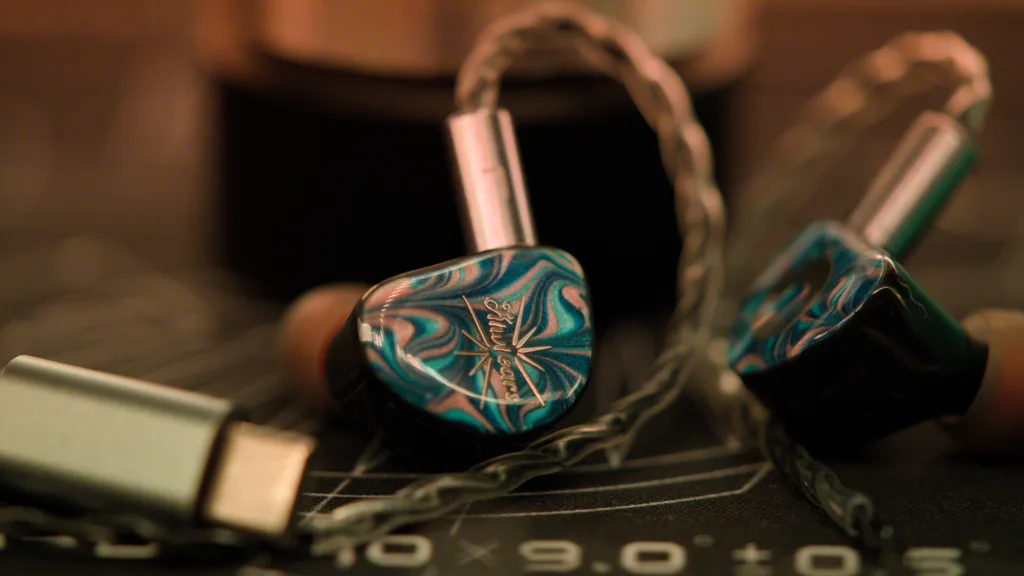
I pair my IEMs with a USB dongle DAC for better quality processing
As for the mids, they pack plenty of detail, but I noticed they are rather recessed. It goes easy on the ears, but that puts the Cadenza squarely in the “warm sound” segment. I missed a few nuanced notes I would catch on other studio monitors, and an EQ might help lift this, but it still won’t fix the sound that just isn’t airy. This is most pronounced when there are vocals on a bass guitar backing track, as the bass muffles the nuances. On the literal bright side, the upper mids are well-contained for easy listening, with no peaks on the graph and no pain in practice.
In my testing on typically shrill tracks with female vocals reaching crescendo, I found the Cadenza an absolute ace. It handles all that high frequency without feeling like I stepped on a Lego. There’s a nice roll-off from the mids, but I didn’t find it too bright. Yes, the detail is well preserved, but if you have come to dislike cheap IEMs for their treble handling, the Cadenza is that one IEM that deserves a second chance. The treble is mellow, but I found Jazz tiring after an hour, which is respectable since saxophones are typically insufferable on anything close to this price point.
Tolerant to EQ, but you won’t need it
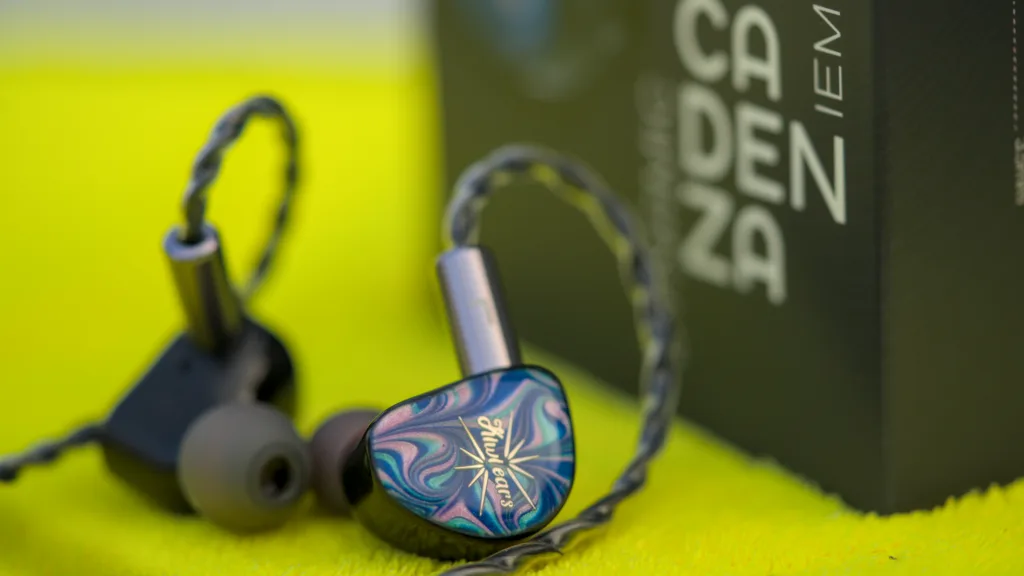
The Cadenza is a well-rounded package from Kiwi Ears at a surprisingly good price
Before I close the section about sound, here’s a quick cautionary note about EQ-ing this IEM. The Cadenza can handle bass and treble amplification well, but if you go too far with the former, it will bleed into the mids, ruining them entirely. There are other bass cannon IEMs to buy if you want the closest thing to a ’90s riced-out Honda sound system parked in your ear canal. The Cadenza is just not it — stray too far from the stock tune and the aura of composure falls apart quickly. That tunability is precisely what you pay more for with higher-end IEMs. The Cadenza just walks a tightrope between good sound, sharp sound, and boomy bass well, and you’re best off appreciating that instead.
As a result, I find that the Kiwi Ears Cadenza aces most YouTube, movie streaming, jazz, and rock-adjacent listening. However, your experience may suffer in pop and hip-hop, given the lack of boomy bass we’ve come to love since the ’90s. This is just a great, classic IEM sound for under $30. I would say it’s an underdog you must consider for easy listening. To start, you still get a safe, mainstream tune, but with good detail and clarity retention you won’t find in cheaper Chi-fi audio.
Yes, we are a gaming-focused site, and I haven’t forgotten that. So, for gaming, you’d typically be best off with over-ear headphones that involve the ear pinna. That’s the flappy bit responsible for ensuring you can pinpoint the direction of sounds. An IEM doesn’t involve this section of the ear at all, so your directional sound detection abilities are inherently limited.
However, larger headphones also convert the same sound signals to audible waves using speaker drivers, so I don’t suppose much differs if your source game isn’t well-designed. That said, the Kiwi Ears Cadenza has a substantially wide soundstage, and I didn’t feel the sound originate in the center of my head. The stereo separation is noticeable, so I could easily tell left from right. However, the recessed mids didn’t make muffled footstep detection any easier in FPS shooters. Here, an EQ could help because the detail and clarity are surely there.
Pros
- Appealing V-shape sound signature
- Great bass handling with detail preservation
- Easy on the ears with mellow treble
Cons
- Cable feels flimsy, like it won’t last
- Intolerant to drastic EQ tuning
- Unsuitable for the critical listener
| Manufacturer | Product | Price |
| Kiwi Ears | Cadenza IEM | $35 |
You’ll be happy with this affordable IEM for casual use. It sounds just as good as it looks, but you have an upgrade path ahead as well, such as the cable or an EQ tune to get more analytical performance comparable to the Truthear Gate. Gamers and cinephiles shouldn’t be disappointed either.