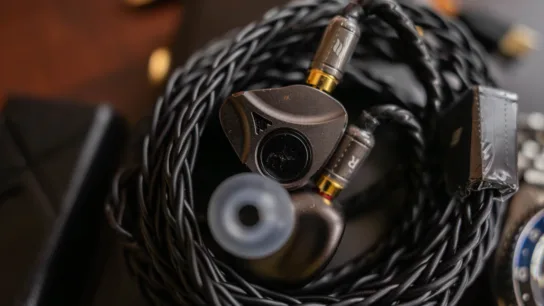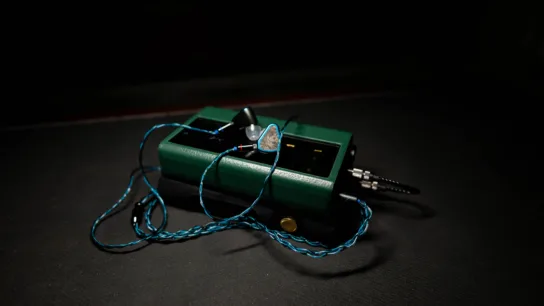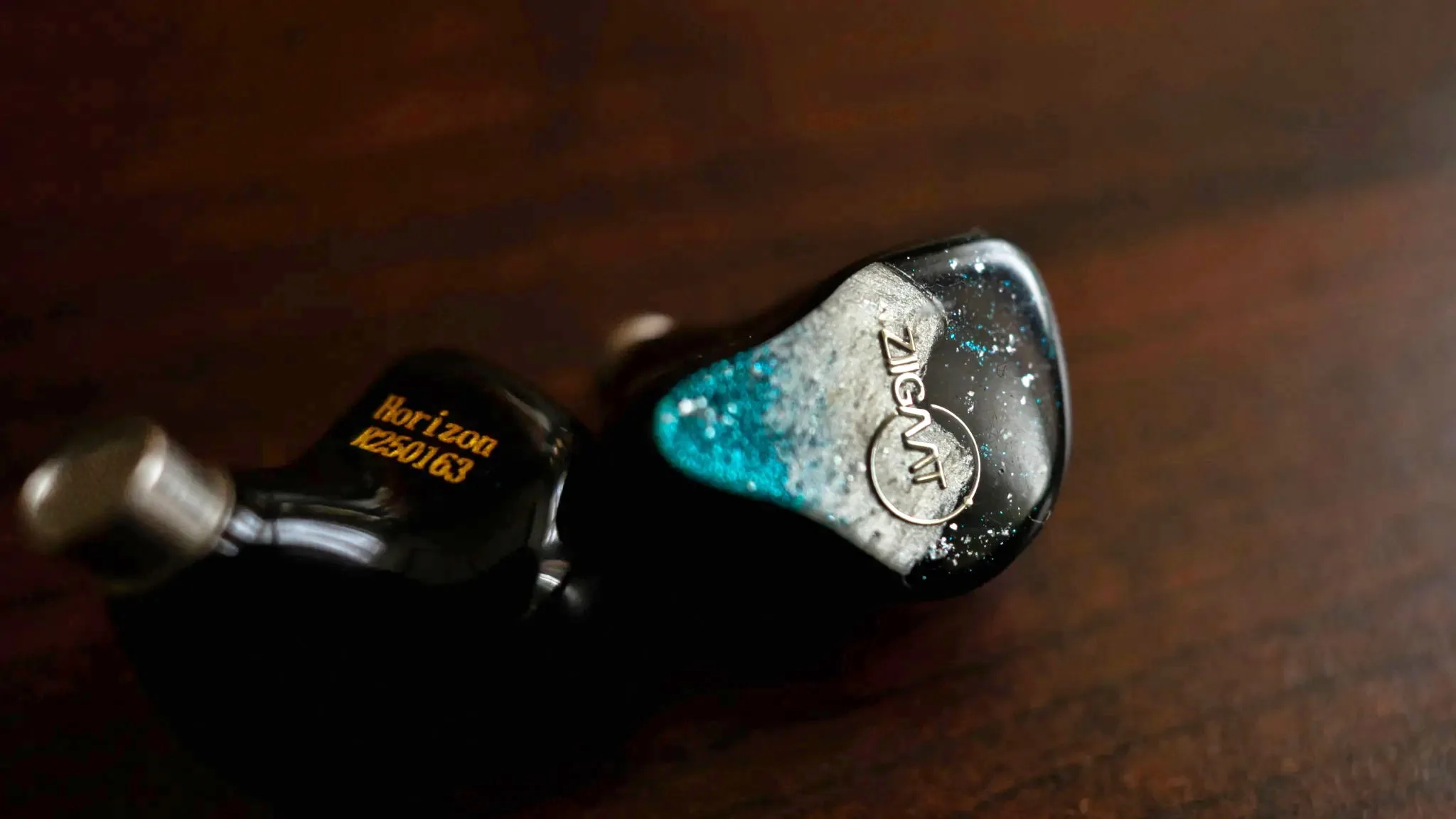

ZiiGaat, an offspring of the house of Linsoul, alongside Kiwi Ears, Xenns Mangird, and ThieAudio, continues to keep the IEM market hot with fresh releases that are sometimes overdone. I have a lot to opine on ZiiGaat’s new take on the JM-1 Meta tuning — the Horizon. After borderline spamming the market like many brands (that we are well too aware of), ZiiGaat intends to refine its choices in the Horizon, and trust me, the company has gone above and beyond to get this right for the masses.
Price, availability, and box content
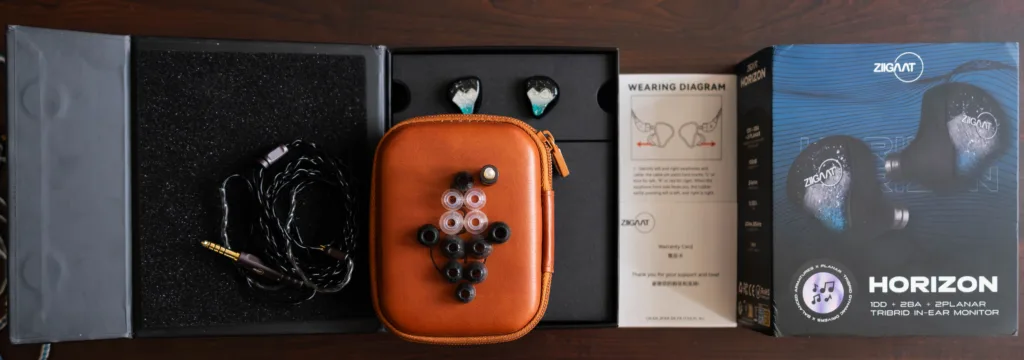
After I unsheathed the cover emblazoned with the product name and description, I was surprised to find a flip-style unboxing experience. Please, ZiiGaat, if the Horizon retails for $330 on Linsoul, surely you could bundle a better cable with it. Just keeping it modular with 3.5 and 4.4mm terminations is not enough. Other brands go further by screwing interchangeable nozzles onto their IEMs, at half the price with a machined metal base. So, a cable upgrade feels like a reasonable expectation.
The provided carry case is a much-needed upgrade, and this time, ZiiGaat does not skimp on the eartips — three sets of clear silicone, three sets of regular gray silicone, and a pair of foam tips. Standard company paperwork fills the rest of the box.
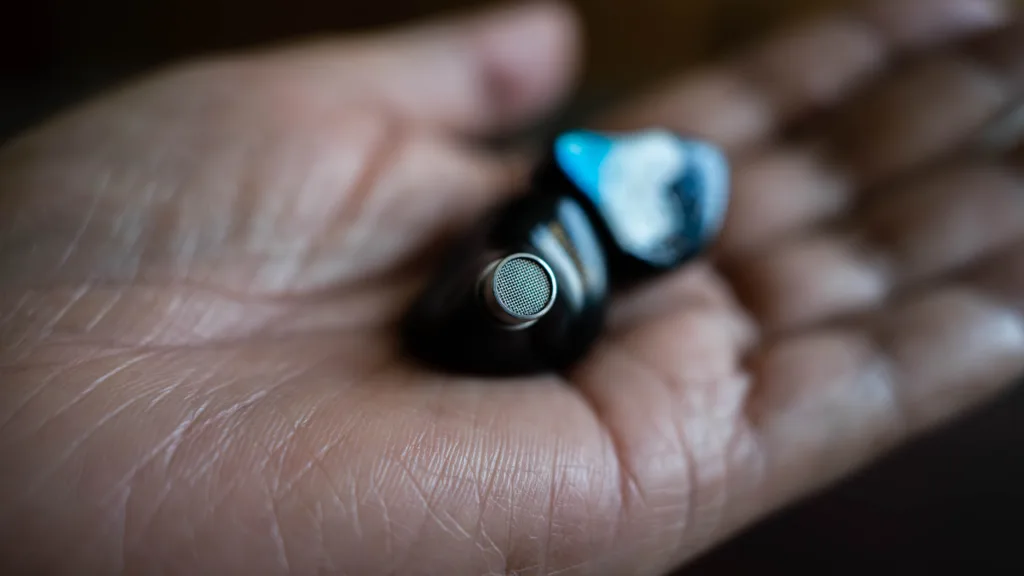
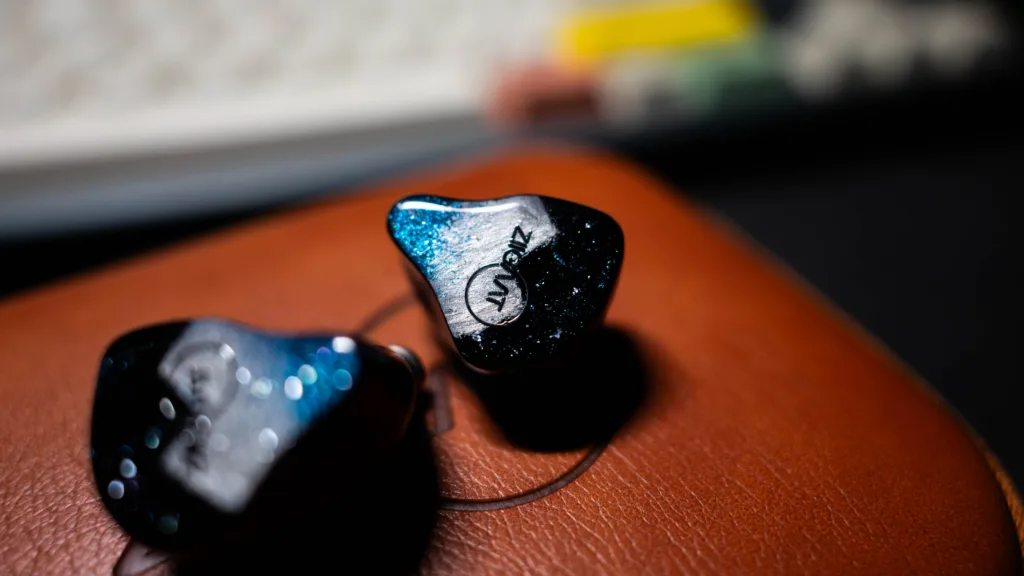
In hand, the Horizon feels like a well-built set of IEMs, but the buds lack the heft I’ve seen from models like the Softears Studio 4. The shells feel hollow, and given that it’s a tribid configuration (with planar drivers), the Horizon will require some care in its maintenance.
Specifications
| Driver configuration: | 1DD + 2BA + 2 Planar |
| Driver details: | 10mm bio-diaphragm + Knowles 30262-163 + custom composite dual planar drivers |
| Sensitivity: | 102dB |
| THD: | 0.55% |
| Impedance: | 24Ω |
| Frequency Response: | 20Hz–35kHz |
| Cable: | 4-conductor silver-plated OFC copper cable with 0.78mm 2-pin connectors and interchangeable 3.5mm and 4.4mm jacks |
| Inline mic: | No |
| Eartips included: | 3x pairs of silicone ear tips S, M, L 3x pairs of transparent silicone ear tips 1x pair of black foam ear tips |
| Case included: | Leather, zipped |
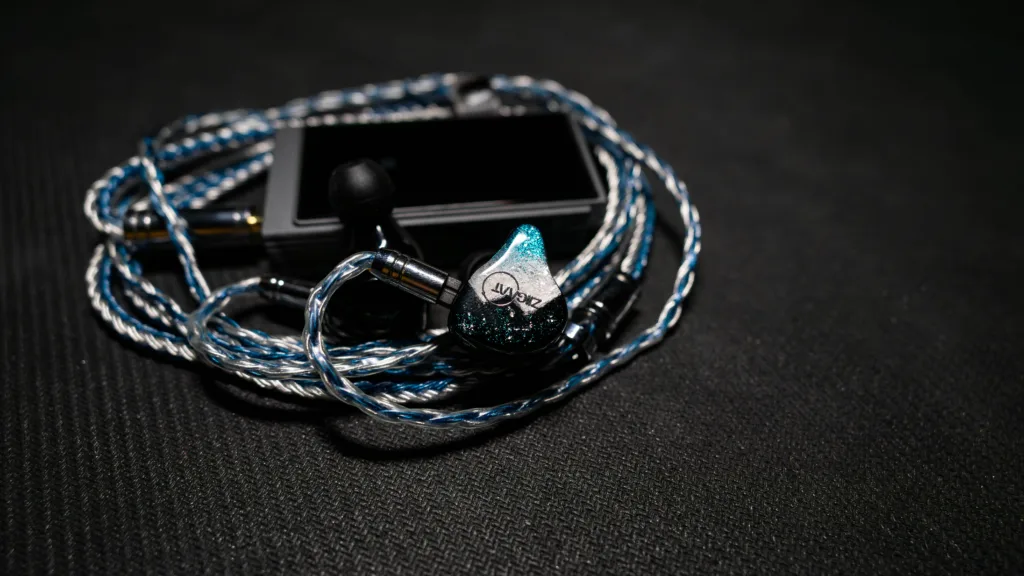
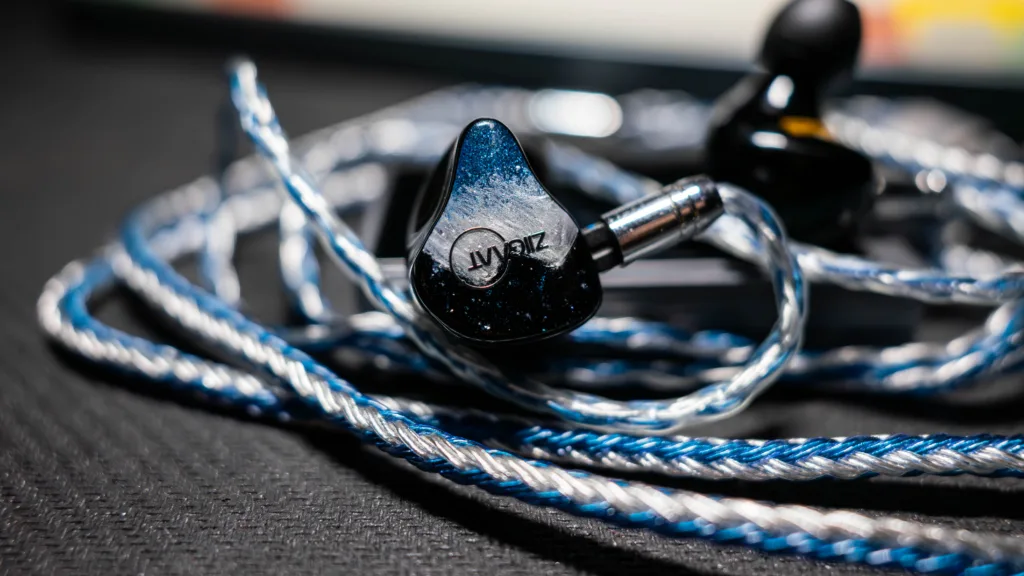
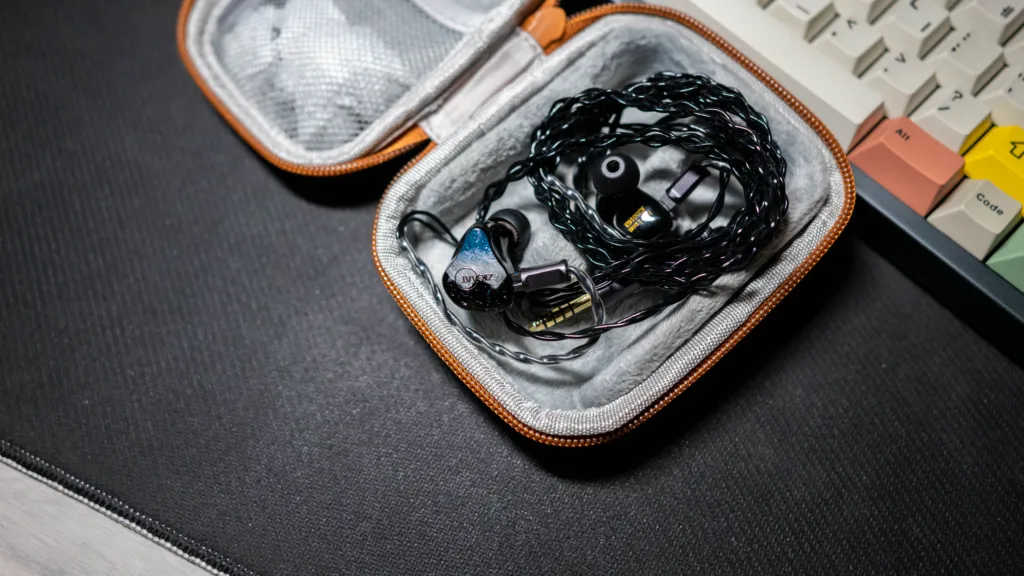
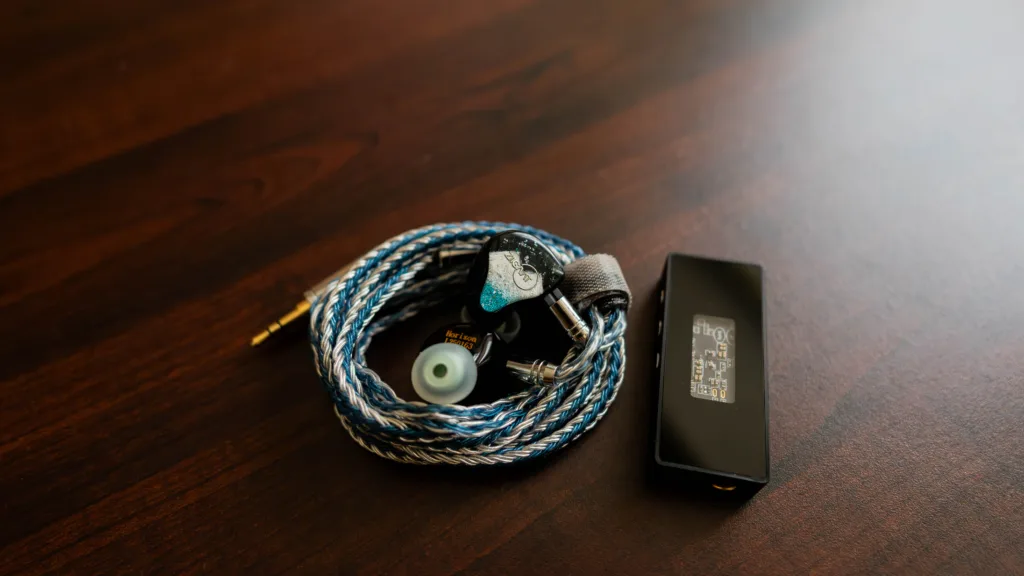
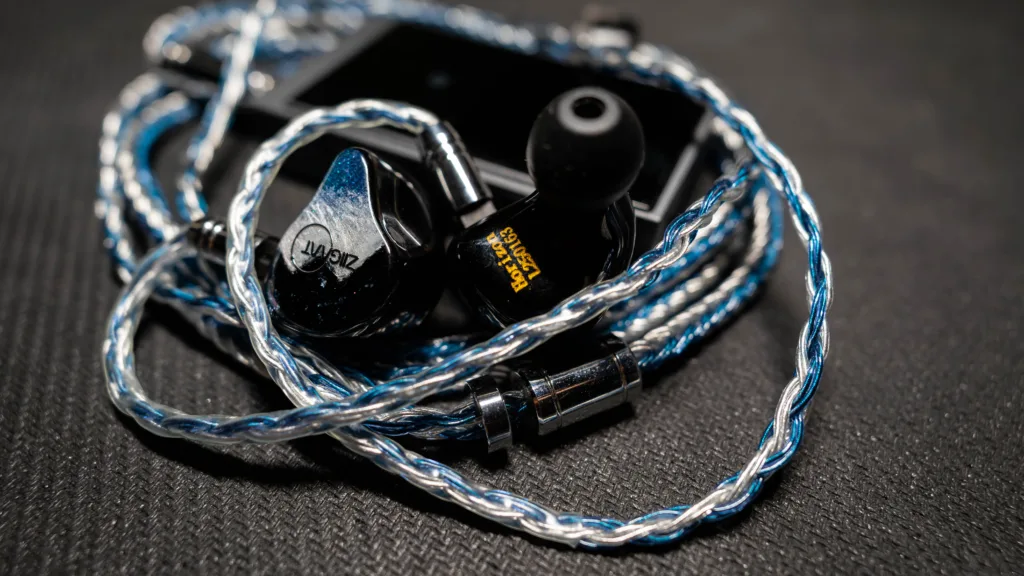
ZiiGaat’s stock cables fatigued me when used for extended periods. This is why I switched to my ever-reliable Tripowin C-01 cable, which also matches the aesthetic of the ZiiGaat’s gorgeous faceplate. Despite being bigger than comparable sets like Lush and Crescent, I had no pressure buildup on the Horizon since it packs a dynamic, two Balanced Armature, and two Planar drivers on each side. The vent on the shell helps alleviate the pressure, too.
Enough side talk, here is the sound
Lows
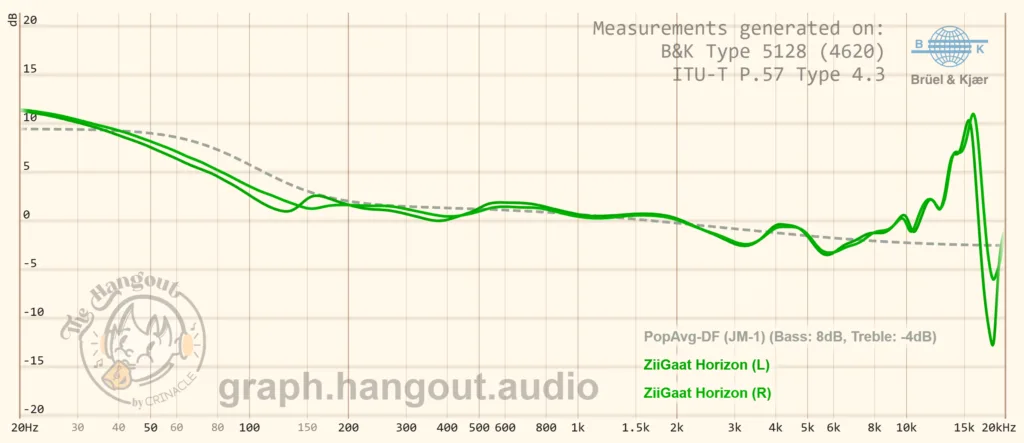
The ZiiGaat Horizon, right off the bat, offers a subjectively perceptible quantity in this department, where one could say it was either dragging or rushing. I would beg to differ and describe it as a chameleon in its character. A decent amount of tip-rolling led me to discover a delectable low end, where delivery is pronounced with ample quality, with a major emphasis on the sub-bass rumble. The Horizon also demonstrates excellent restraint, not coming off as anaemic or overpowering, where the lows bleed into the midrange.
In tracks like Daft Punk’s Get Lucky, and Rush’s Limelight, right out of the gate, the Horizon lets the bass take over, distinctly establishing one pillar of what is a very enjoyable listen. Each note and every string pluck has an audible character in its identification, yet somehow still manages not to come off as lean. Elements in these tracks, like kick drums, are very well separated, packing a good amount of heft and presence without bleeding or dominating the lows. That’s a remarkable improvement considering the bleed was a problem in one of ZiiGaat’s similarly tuned sets, the Crescent. The entire low presentation is noticeable yet neatly tucked in, unlike the Lush, where I felt a hairsbreadth more quantity would have worked wonders.
The Horizon, however, could have used some oomph in the mid-bass if I were to nitpick, but I can happily live without it. Full marks from me, in the lows, for the Horizon.
Mids
This is another area where the Horizon is just flat-out competent — it impressed me strongly with an overall quality that it so proficiently displayed. I just wish ZiiGaat would cut to the chase and release the Horizon after the Lush.
In tracks like Tool’s Pneuma and the Police’s Message in a Bottle, the Horizon feels wider than the stablemates like the Crescent and Lush from ZiiGaat’s lineup, at least the ones that I have tried. Even when comparing it with sets in the same price range, there’s some decent width. Adding to that, tonality is flat-out excellent, where nothing feels wonky, and timbre does not come across as metallic in its taste — not even a tinge of it — which is what breathes a lot of life into the strings of these tracks. Guitars are greatly enjoyable on this set as the separation goes hand-in-glove with imaging, which, for the most part, is downright precise. Even on tracks like Jimi Hendrix’s All Along the Watchtower, the panning was impressive, to say the least, and it definitely had me transcend auditorily into a different zone.
One thing I must add is that performance is not all sunshine and rainbows here. The Horizon left me wanting more energy in the vocal department on my test tracks, which felt inconsistently laid-back. Some more prominence in its delivery wouldn’t have hurt.
Highs
Now, here is where the proposition for this set can get dicey. On the one hand, the Horizon does soar pretty high and extend beautifully, but on the other, it has moments when the extension is jittery. That, in turn, can slightly smear what could have been an indelible impression from ZiiGaat.
In tracks like Adele’s NRJ Awards live version of Easy on Me, and Whitney Houston’s I’ll Always Love You, the Horizon maintains the excellent tonality, although it does show minor cracks where I observed a minute’s worth of pierce through during the climaxes on both tracks, and when the voices oscillate and the pitches shift. Even if the Horizon blasts tracks where cymbals dominate, like Rush’s The Spirit of Radio, for instance, I observed Geddy Lee fragmentarily pierce as he pushes through. However, Peart’s cymbals paint a stark yet enjoyable contrast because of the shimmer and how smooth they actually sound against the vocals.
Circling back to tracks like Kendrick Lamar’s Alright, the Horizon redeems itself further by juggling the fine act of keeping the horns and the clipped cymbals on this track neat and tidy. The timbre just does not slip up, nor does tonality take a hit. The background vocals on the track are tainted by the prominence of those horns and cymbals, but to summarise, it is still a powerful performance.
Concluding notes and comparison
The ZiiGaat Horizon has simply won me over with its quality, and it is the best IEM I have heard from the brand. The Horizon steamrolls over sets like the Crescent, which felt very rushed given how ZiiGaat timed its JM-1 tuned sets, seemingly the new meta. The Lush, in comparison, feels like the prototype of this series, and the Horizon just ended it on a high note. Everything from the Lush feels like a well-deserved upgrade for the Horizon. And the best part is, mere tip-rolling was enough to have a fantastic time on this set without EQ whatsoever. For genres like rock, metal, jazz, and soul, the Horizon earns my recommendation, but for something like R&B, hip-hop, and such, there are other IEMs that have a better argument for consideration.
Pitted against sets like the Softears Volume S, the Horizon does start to falter as its rival tears it down with one of the best sub-bass deliveries I have heard in the segment, a seemingly wide stage, grand vocals, and a brighter yet not fatiguing treble — something the Horizon does rather inconsistently.
Compared to a yesteryear set like the Shuoer Cadenza 4, the Horizon comes close but does not overtake as the classic set can just keep on delivering with glee an entire course of detail, and still not present any pierce despite being one of the brightest sets I have heard recently.
So, in a way, Horizon does get most things right, but ZiiGaat still has some work left to do in truly bringing it all home. This IEM is pointed squarely in the correct direction, earning a fruitful A+ from me.
I do wish ZiiGaat would slow down with its releases. Some patience in developing future sets might be just what the doctor ordered.
Will I buy it at retail? Absolutely yes.
Will I buy it used? Blind Buy.
Pros
- Delicious sub-bass rumble
- Tonality maintains greatness with consistency
- Imaging is great
- Wide stage
- Instrument separation comes close to segment leaders
- It’s not power hungry
Cons
- Lacking sub-bass quantity
- Laughable stock cable at this price
- Pressure buildup is a concern
- Treble lacks detail
- Vocals could use more body and weight
Eartips (in descending order of performance, i.e., best first)
| KBear Coffee: | Best pairing for most JM-1 style tuned IEMs, brings cohesion at the cost of a marginal drop in detail |
| Spinfit CP100+: | Strengthens instrument separation, improves spacing, breathes more life into vocals, but leans out the delivery of the bass |
| Spinfit W1: | Same as CP100+ but makes the sound brighter |
| Dunu Candy: | Vocals stand at the forefront, while everything else takes a backseat |
| Final E: | Significantly increases bass quantity, but at the cost of a perceived recessed midrange and a sharp drop in the quality of the highs |
| OEM | Product | Price |
| ZiiGaat | Horizon | $330 |
ZiiGaat has outdone everything it has released with the Horizon, and it measures tall amidst the segment with most things going great for itself; however it needs to still address a few areas of concern.
Sources used:
FiiO KA17 in low and high gain, TRN Blackpearl in low gain, and Shanling UP6 in low gain