
Kiwi Ears is yet another subsidiary of the popular audio brand Linsoul. Although a newer entrant in the market than KZ, ThieAudio, BGVP, and Penon, it has been releasing a lot of IEMs in various flavors — with planar magnetic drivers in Aether, bone conduction drivers in Etude, and multiple configurations in Astral and Septet. Today, I have the sequel to Kiwi Ears’ Orchestra line-up, the Orchestra II, and they’re sporting a rather unexpected 10BA driver configuration.
Price, availability, and box content
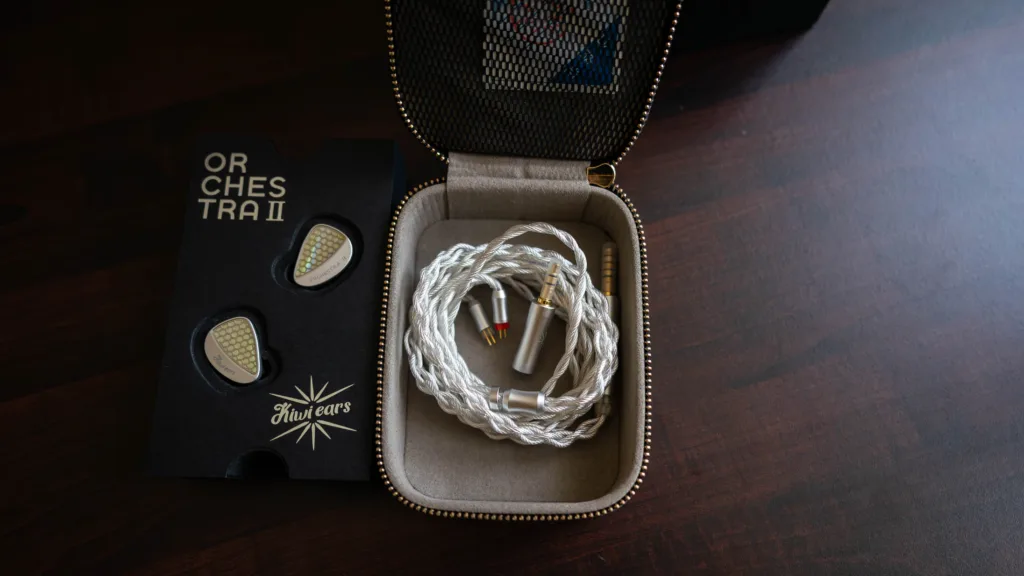
This unboxing differs from all the other Kiwi Ears products I have opened, which so far have been unanimously unflattering, to say the least. I’ve had the pleasure of unboxing the Cadenza (review here), Quartet, and Quintet, but compared to the Orchestra II packaging, it’s on another level, especially when this IEM retails at a rather reasonable $350 on the Linsoul website.
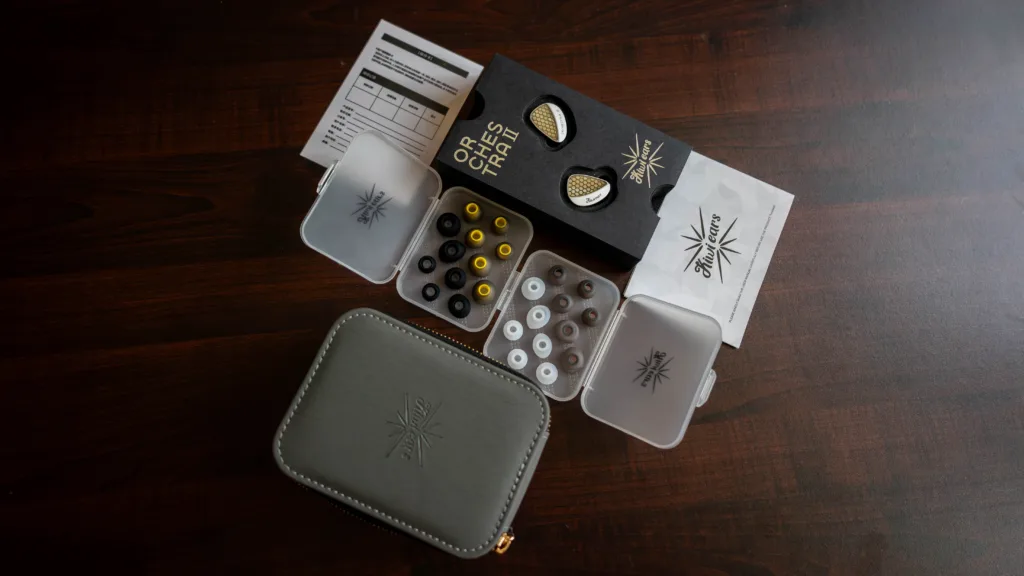
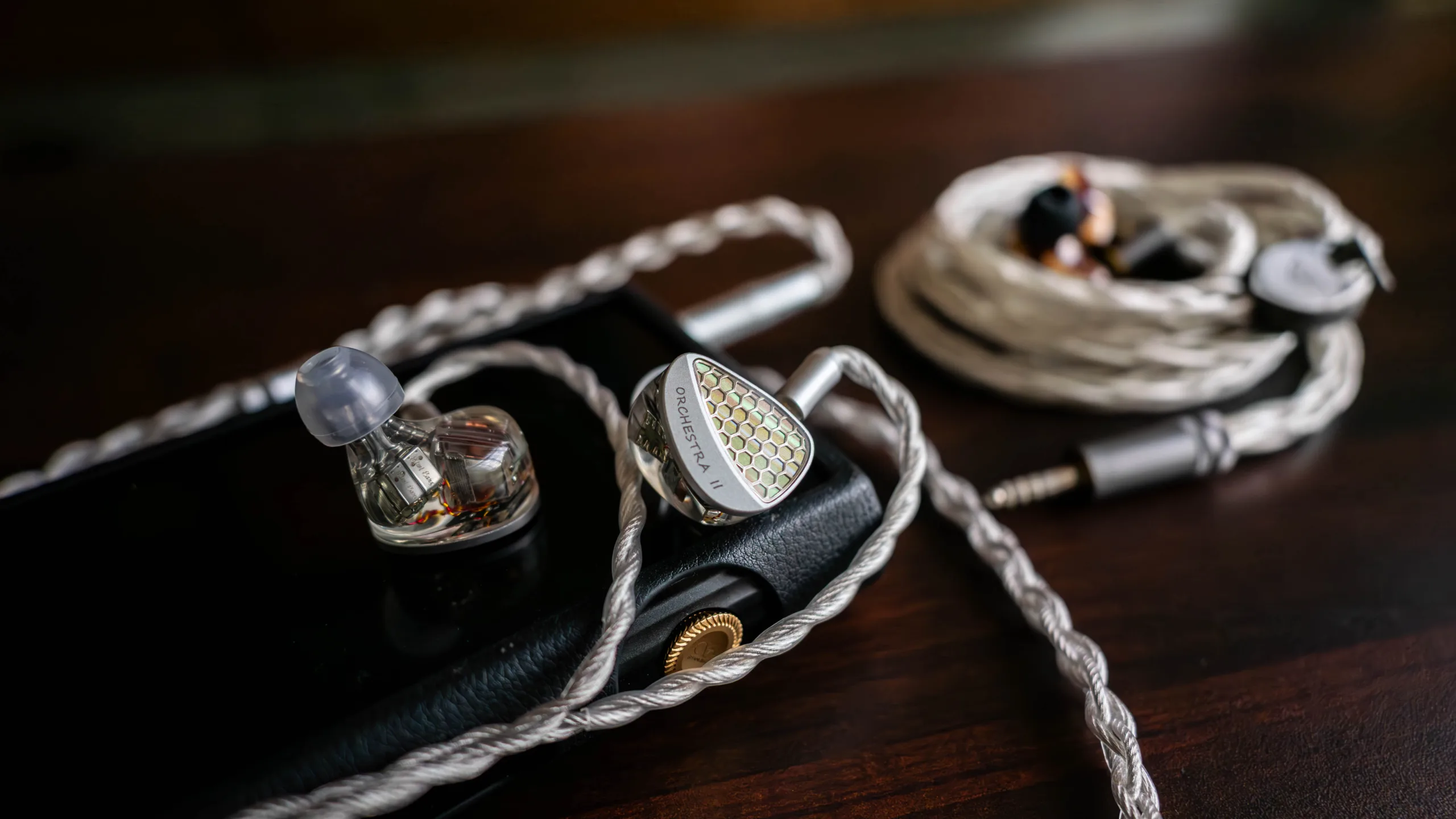
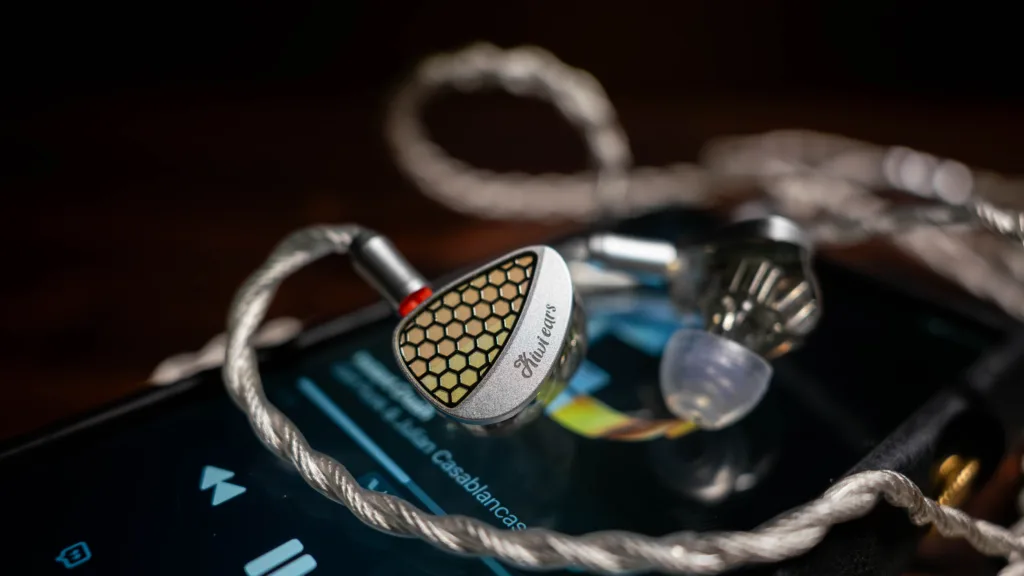
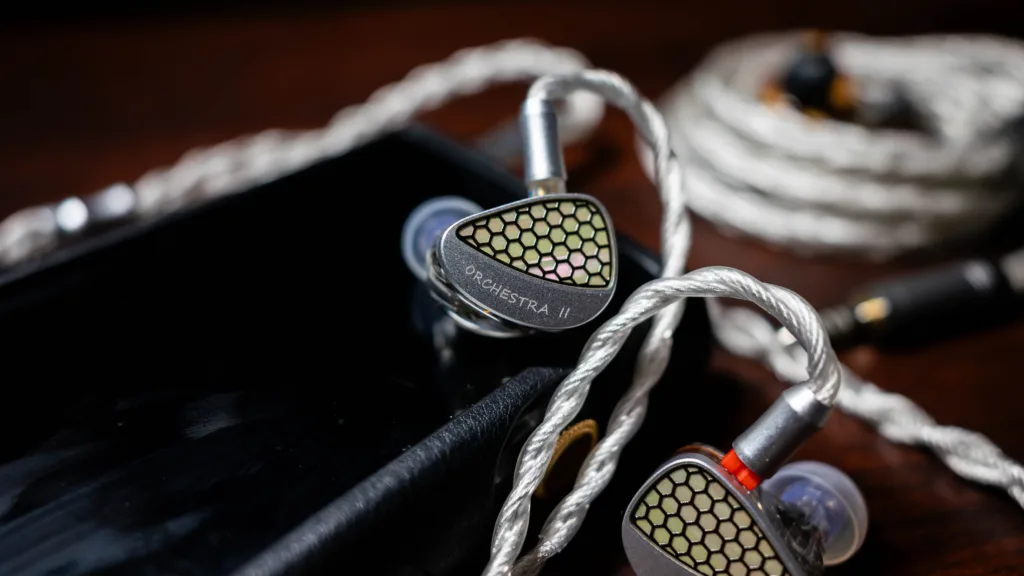
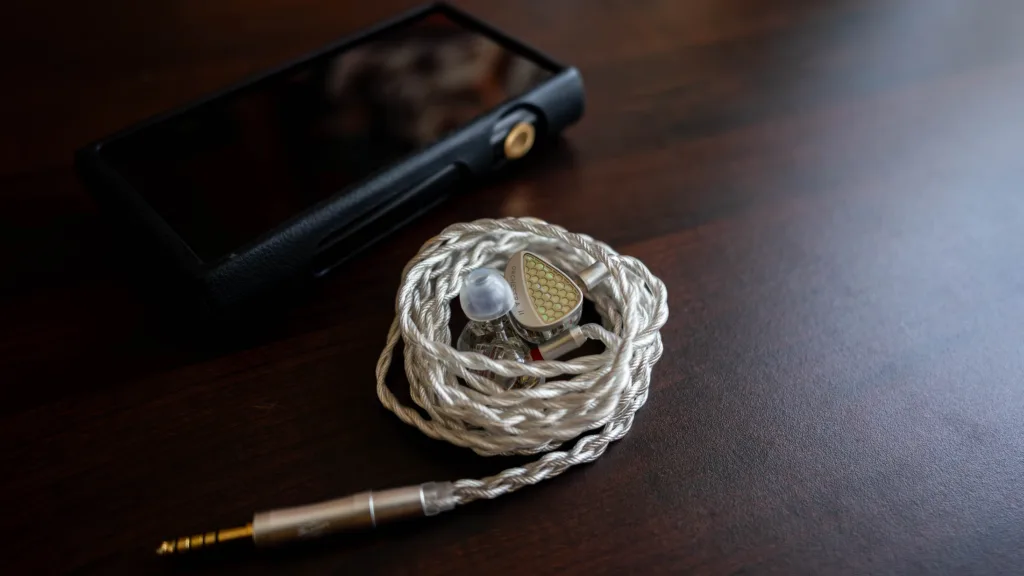
The Orchestra II comes packed in a separate compartment beside a Kiwi Ears-branded cardboard box that contains the carry case. This case is a huge upgrade compared to the usual fare. Inside, there’s a well-built cable with 0.78mm two-pin type-A termination at the IEM end, and modular interface connectors so you can swap out the 3.5mm for a 4.4mm connector on the fly.
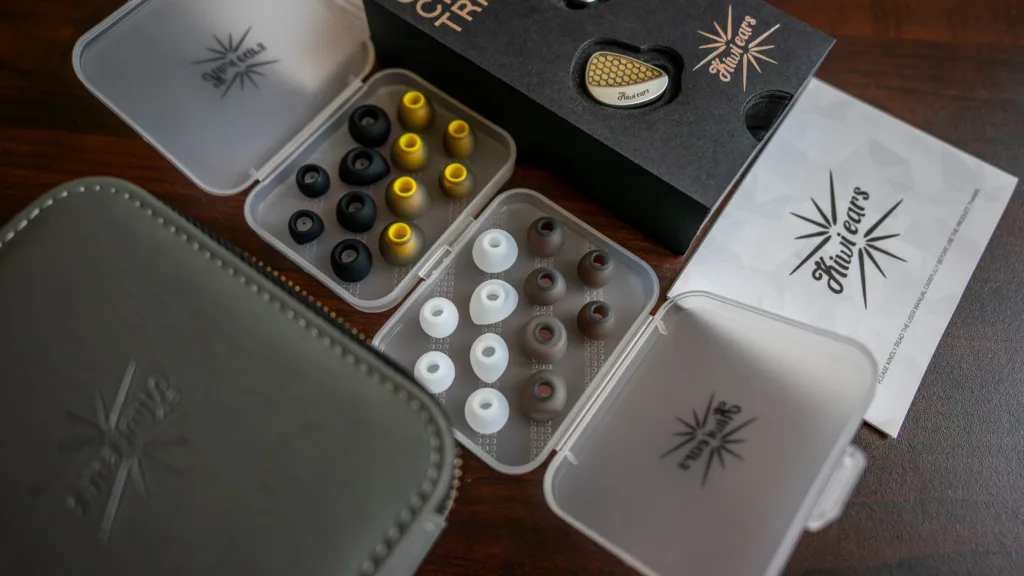
Under the IEM compartment is another cardboard box, containing two separate cases of assorted eartips. Kiwi Ears has not skimped on variants this time around. Foam varieties are skipped altogether, but three sets each of clear, black, and gray silicone (with yellow inner rings), and another set with red inner rings, are provided. In my usage, I didn’t notice any difference in sound, but it’s still nice to see so many supplied eartips.
Specifications
| Driver Configuration: | 10 Custom Balanced Armatures Four-Way Crossover |
| Sensitivity: | 110dB SPL/mW |
| Impedance: | 15 Ohm |
| Frequency Response: | 20Hz-20KHz |
| Cable: | 0.78mm silver plated OCC with 2 pin type A connectors and interchangeable 3.5mm plug + 4.4mm jacks, approximately 122 cm in length |
| Inline mic: | No |
| Eartips included: | Eartips (S/M/L) × 12 pairs (3x grey silicone with yellow rings, 3x with red rings, 3x black silicone and 3x clear) |
| Case included: | Leather, zipped |
Build quality and comfort are on point
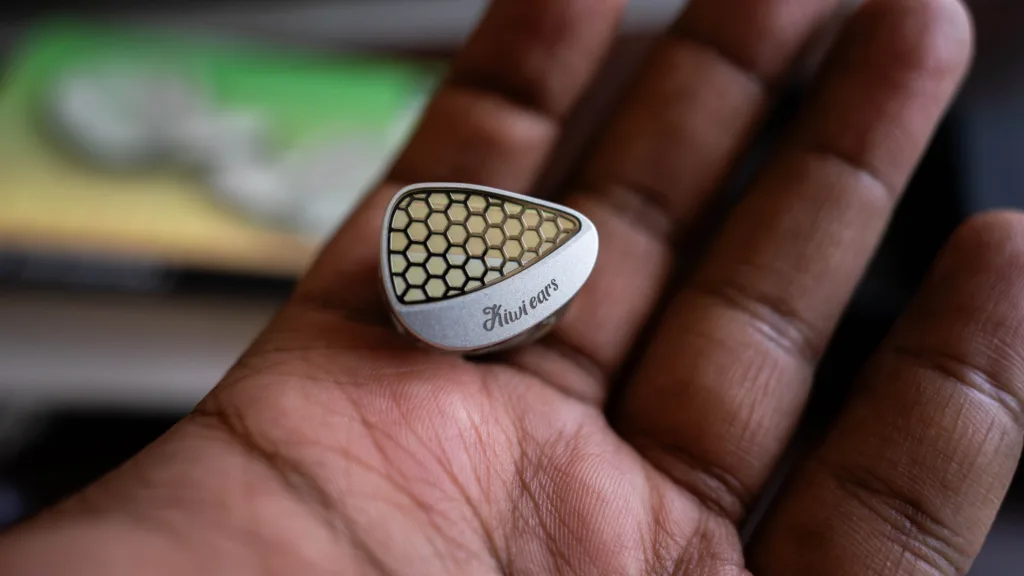
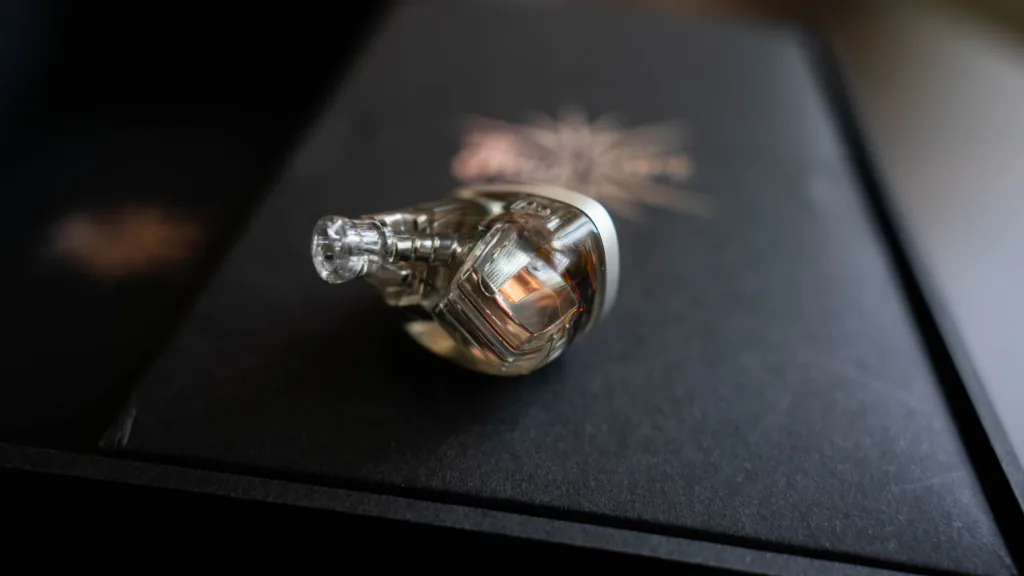
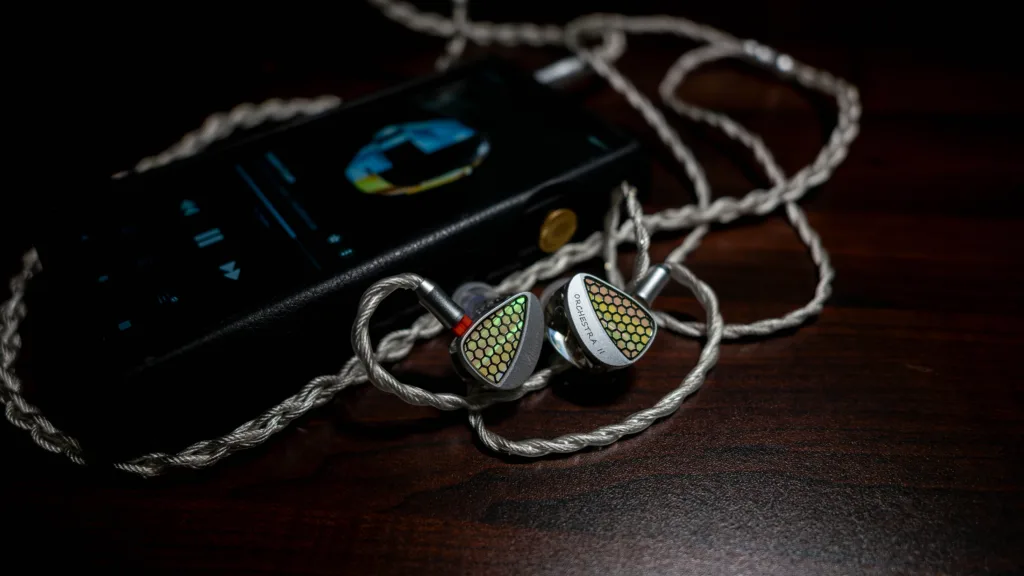
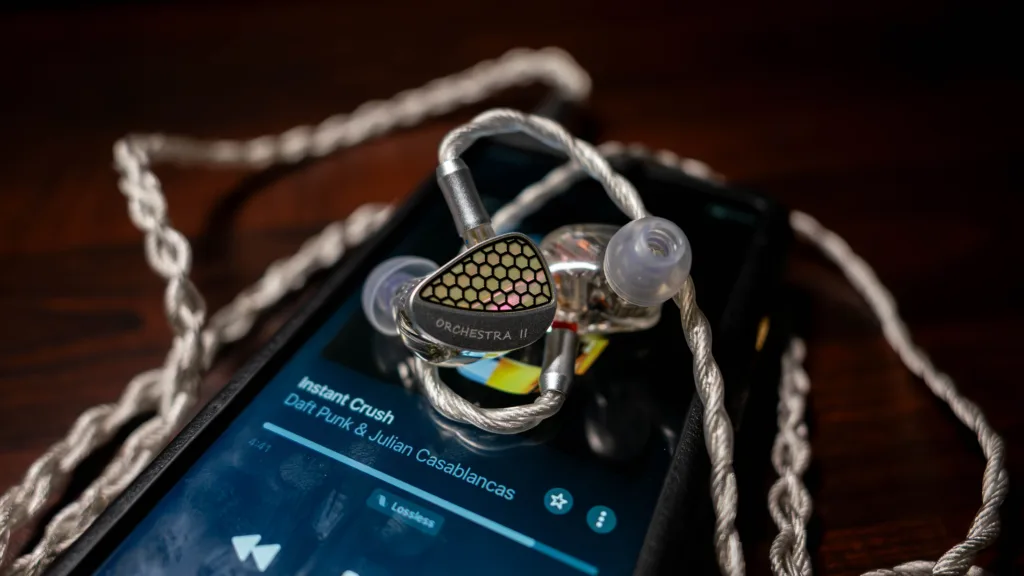
In hand, the Orchestra II feels well-constructed — the faceplate features a striking honeycomb design fashioned out of metal, which is a first for an IEM in this price segment. The design reminds me of the KZ AM16, which is significantly cheaper, but full marks to Kiwi Ears for trying something a little unorthodox. The shells are transparent, which shows off their 10 balanced armature driver configuration on each side. I must warn you that, as a result, the hefty Orchestra II may cause some discomfort with the stock cable, given its weight and a lack of vents.
These downsides contribute to ear fatigue, as the pressure that builds in the ear canal cannot escape effectively. Vents in the shell would’ve helped reduce the piston effect I experienced; the sound should put less force on the eardrum.
This is how the Kiwi Ears Orchestra II sound
Lows
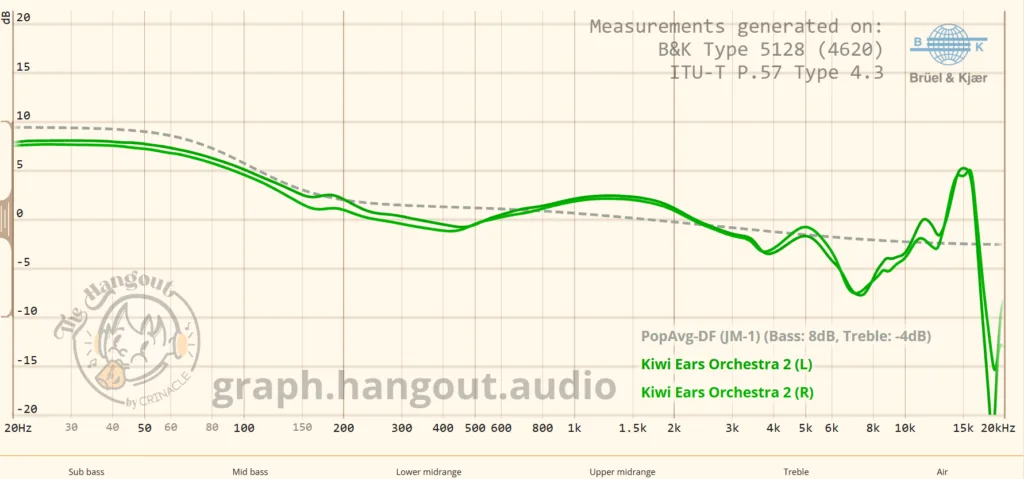
The Orchestra II has a bass delivery that is borderline anemic or, for lack of a better word, unflattering. There is no wow factor, and it feels like the bass wants to extend and carry more weight in its character, but fails. In tracks like Daft Punk’s Instant Crush, Get Lucky, and Rush’s Limelight, the Orchestra II just don’t differentiate between the sub and mid bass. Elements like the bass guitar have an acceptable amount of groove and punch, but then, for identification, kick drums noticeably blur, and the effect is stunted. The Orchestra II’s are bland, lacking the slam I expected and drowning out details, which only makes matters worse.
The texture of the bass in the Orchestra II is really the one redeeming quality, since it feels smoothed out and easy on the ears. Anyone who prefers a softened delivery on their lows may enjoy this set.
Mids
This is where the Orchestra II turns the tide further in their favor. At a glance, the midrange has a healthy amount of body, does not feel sterile or lifeless, and has character that elevates the listening experience from boring to interesting.
In tracks like The Police’s Message in a Bottle and Tool’s Pneuma, guitars grovel right out of the gate with fabulous, enjoyable tonality. As I switched to tracks with a fair share of strings, the Orchestra II delivers with a distinct yet cautious approach — notes are spaced out, a stark contrast from my impression of the lows, where timbre is untouched and natural. Surprisingly, the notes seem to extend beautifully and don’t die out prematurely, keeping the engagement intact.
Another thing the Orchestra II nails is weighted and intense vocals, especially in Pneuma, where Maynard’s emotions come through accurately, without the slightest compromise. Throw in the added beauty of precise imaging and a breezy soundstage, and the whole track comes back to life. To push this IEM further, I switched to Jimi Hendrix’s All Along the Watchtower and the Orchestra II got the imaging right again. The contrast amazed me, between the rather sluggish lows and this powerful midrange. It’s safe to say, the Orchestra II have one of the cleanest deliveries in the midrange I’ve heard in an IEM at this price point.
Highs
The Orchestra II maintain their shaky composure through the highs competently, deserving appreciation, but this comes at the cost of extensive eartip rolling, which again, is a downside of this IEM. In tracks like Adele’s NRJ Awards live version of Easy On Me and Allen Stone’s live version of Give You Blue, the Orchestra II extends very high and, for the most part, remains blemish-free, but the IEM falters once again in tracks where there’s a lot of vibrato and pitch shifts.
Unlike IEMs that are my personal benchmark in these particular elements, like the Shuoer Cadenza 4, the Orchestra II falls hopelessly short in keeping everything intact on Give You Blue, as there is a clear, audible pierce where the guitar stays intact. The vocals keep oscillating between engaging me with their tonality and making me want to rip these IEMs off because they sound so piercing. Sadly, this behavior persists regardless of eartips.
In tracks like Kendrick Lamar’s Alright, the Orchestra II neither fails nor succeeds in keeping their coherence — on one hand, cymbals extend and end right where they need to, and it synchronizes very well with the horns that keep fleeting between prominence and obscurity, but there is a problem in layering. The background hums drown out the horns, where once again, the Orchestra II end up with a disappointing finish despite a strong start.
Concluding notes and comparison
The Kiwi Ears Orchestra II could have been the company’s best IEM to date, but in my experience, there are a few glaring shortcomings that kneecap them in the race against the rest of the brand’s lineup, like the Astral, and rivals like Softears Volume S, Xenns Tea Pro, or ZiiGaat Horizon.
The Orchestra II fails to stand up against even older IEMs like the Shuoer Cadenza 4, where its wonderful midrange remains the pair’s only strength. Everything else about this IEM either feels lackluster or displays massive room for Kiwi Ears to improve.
It’s sad because this time, Kiwi Ears got everything else right — the Orchestra II displays robust build quality, they are comfortable despite their big shells, come with a very nice modular stock cable with modular terminations, a decent carry case with ample storage, and a very healthy assortment of eartips. I can see the set as a reluctant recommendation for genres like jazz, classical, and rock, but it would be an absolute letdown for lovers of hip-hop, RnB, metal, and soul.
I hope Kiwi Ears listens to user feedback and considers the fact that it’s competing in a fierce price bracket where peers are considerably better. With the Orchestra II, the company has clearly taken a step back, and that is why the IEM earns nothing above a B- from me.
Will I buy it at retail? Absolutely not.
Will I buy it used? Only if there is a very good deal, other IEMs will still have it beat.
Pros
- Robust midrange performance
- Weighted vocals with good tonality
- Imaging is stellar
- Timbre does not slip
- Good stage
- Great build quality
- improved stock accessories
Cons
- Bass lacks energy and character
- Separation in lows could be better
- Poor value at sticker price
- Weak separation
- Piercing/unstable treble
- Inconsistent highs
- No vents and big shells cause fatigue
Eartips (in descending order of performance, i.e., best first)
| Moondrop Spring: | Opens up the entire IEM and bass response still remains anemic, but the midrange sees it’s fully glory. Vocals acquire weight and the highs clean up |
| JVC Spiral Dots: | Shrinks the midrange in favor of marginal gain in sub-bass quantity. Vocals still have their weight, but highs take a step down in quantity |
| Spinfit CP100+: | Vocals take center stage, bass becomes fully anemic, but midrange remains composed, and highs gain sparkle at the cost of detail |
| Spinfit W1: | Bloats the bass and bleeds into the midrange, imaging takes a hit, separation worsens, and highs become smoother |
| Final E: | Worsens the entire sound and makes it sound tinny |
| OEM | Product | Price |
| Kiwi Ears | Orchestra II | $350 |
Kiwi Ears aimed high with the Orchestra II, but fell short of finishing strong. A good midrange is not enough to negate its shortcomings, and its driver configuration cannot be an excuse for a lean, anemic bass. Kiwi Ears needs to do much better.
Sources Used:
FiiO KA17 and TRN Blackpearl portable DACs in low gain, Shanling M9 Plus digital audio player