 Ramanuj Kashyap
 There are plenty of IEM brands out there, and even though GK was once a little-known KZ sub-brand, what little recognition remained faded quietly when CCA became the parent company’s go-to “premium” line. GK was meant to be that premium branch from the start, but CCA caught on faster, resonating with more people, leaving GK hung out to dry.
However, GK just dropped what I believe is one of the most hyped releases in the IEM world, stepping out from the shadows of its past with the Kunten, which costs less than a fast-food combo meal and even comes complete with three sets of aftermarket tips.
Unboxing, comfort, and build
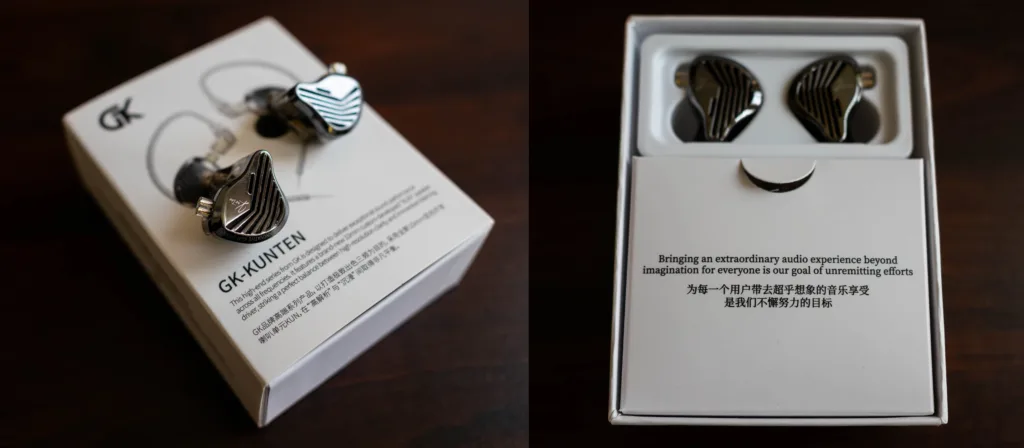
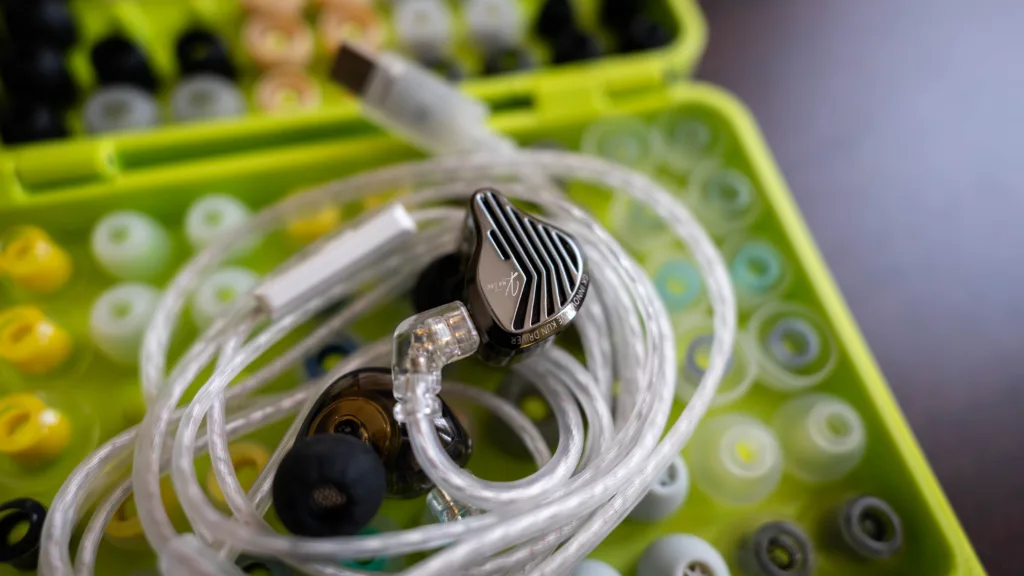
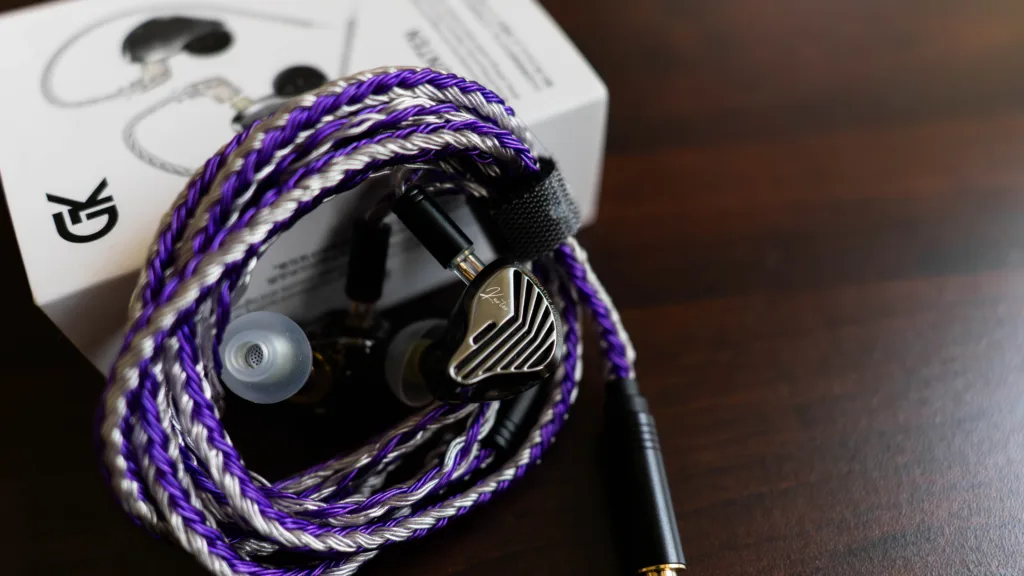
Unboxing the Kunten is nothing special — offering typical run-of-the-mill packaging that’s shared with all KZ IEMs: slide out the cover that advertises the model, then find the IEMs packed into a little compartment with a cover that reminds us to enjoy music first and obsess about gear later. Lift this cover, and you’ll find a cable and three sets of KZ Starline eartips.
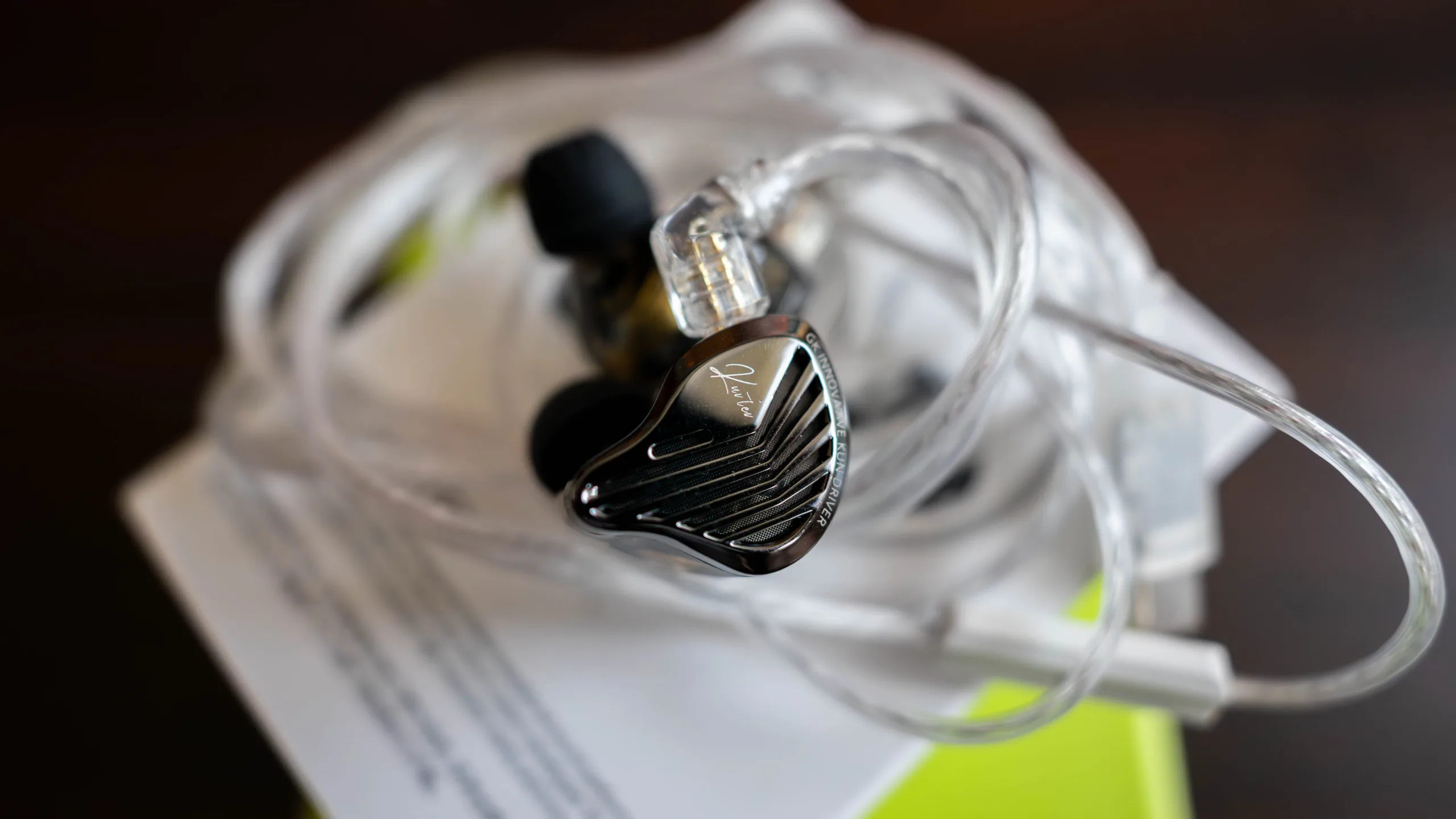
The Kunten are a small IEM, and should not pose fit issues to anyone unless their ear canal is on the small side. In fact, the Kunten remarkably resemble a KZ-brand IEM that I already own, adore, and still consider as one of its best products to date: the CCA CRA+. Although I don’t recommend using IEMs for prolonged periods, I used the Kunten for over eight hours, and the comfort remained as pleasant as when I started.
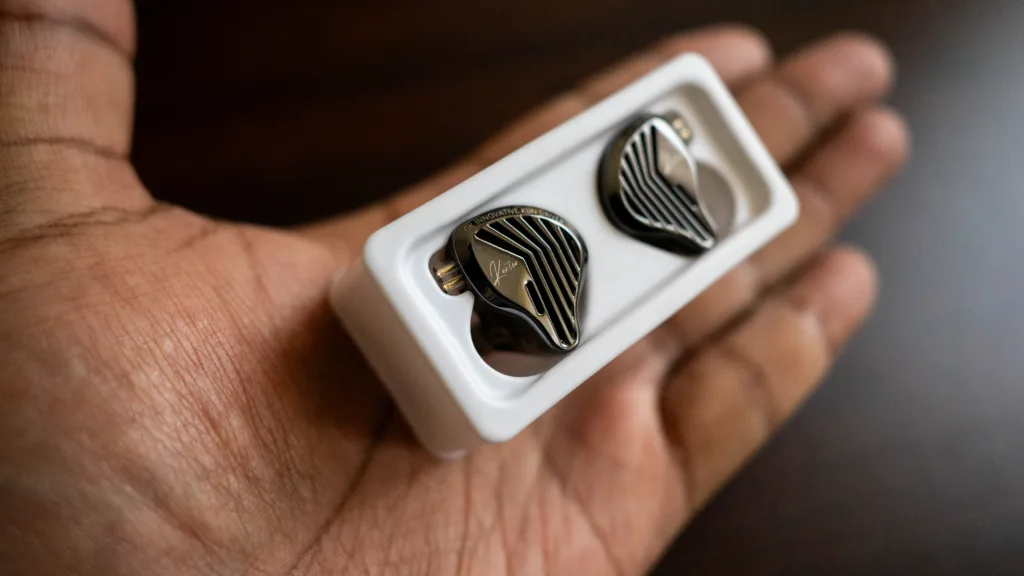
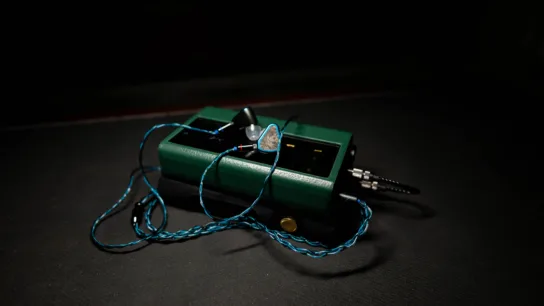
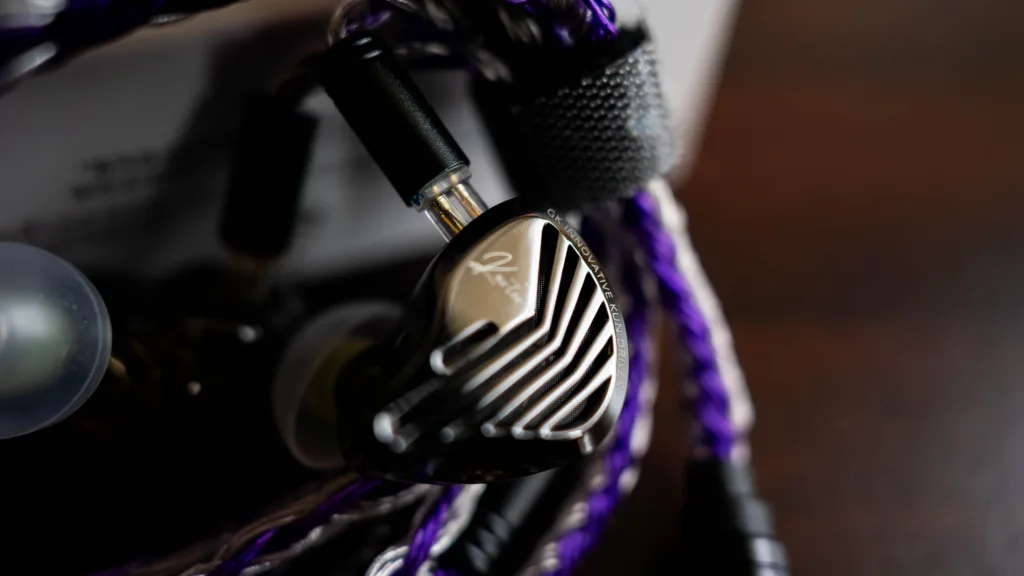
Build quality is unremarkable, but this IEM costs $10 or less, depending on the coupons you apply at checkout. Also, the faceplate appears to have grills, but it likely isn’t an open-back IEM like the Tangzu Yu Xuanji, for instance, and contrary to what GK advertises. At this price point, the Kunten does a phenomenal job delivering agreeable sound, and to help fully understand what the IEM offers, I used a 24-core cable with 2-pin connectors and a 3.5mm jack from XINHS to evaluate performance when paired with sources like portable and desktop DAC amps.
Specifications
| Driver configuration: | One 10mm custom-developed dynamic driver named “KUN” |
| Sensitivity: | 109dB/mW@1KHz |
| Impedance: | 43 Ohm |
| Frequency Response: | 20-40KHz |
| Cable: | 0.78mm QDC 2 pin connectors with mic and USB-C {No DSP}, also available without mic and with 3.5mm termination |
| In-line mic: | Yes, with in-line pause/play controls |
| Eartips included: | S/M/L pairs of KZ Starline |
| Case included: | No |
| DSP support: | No |
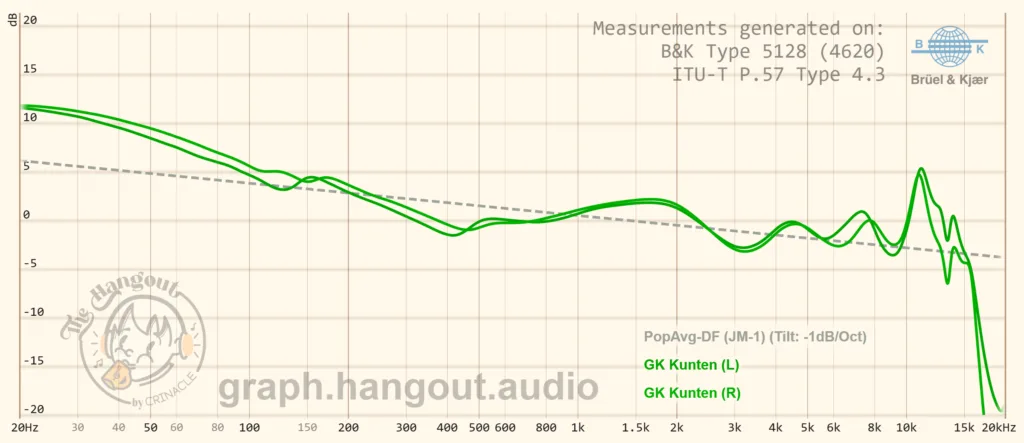
How the Kunten sound
Lows
The GK Kunten has a sub-bass performance that is ridiculously powerful, especially for its price. Where competitors handle the sub-bass with control, initially, the Kunten holds its own very well when pushed, while the rivals bleed into plenty of notes.
In tracks like Daft Punk’s Get Lucky, Instant Crush, and Rush’s Limelight, the Kunten effortlessly brings out powerful bass lines and needs nothing else, like EQ or other aftermarket eartips, to propel itself to such a high standard.
The Kunten destroys everything KZ has made to date.
The bass lines’ tonality rivals IEMs that are way above Kunten’s league, and I can see why the hype so far is justified. Especially in Limelight when Geddy Lee goes hard with tons of detail in his bassline, the Kunten presents everything without an ounce of restraint, but in Instant Crush, such heavy bass can feel a little overwhelming.
Additionally, the Kunten respects the space bass might need and lets it breathe without bringing in congestion. Overall, the Kunten cruises through this Lows section with only a small blemish in its otherwise spotless performance.
Mids
It’s safe to say that the GK Kunten is an IEM with one of the most dominant showings through its midrange performances, and it’s quite astonishing how capable the set sounds.
Taking a slight detour from my usual test tracks, this time I pushed the Kunten through Periphery’s Marigold, Tesseract’s Juno, and Meshuggah’s Bleed. The IEM brings phenomenal instrument separation to begin with, and while these tracks are very busy with a lot of cymbals, guitar riffs, and solos, the Kunten delivers it all unrestrained.
Timbre can feel minutely metallic, but I focused more on appreciating how the Kunten dives deep into ghost notes — those near-inaudible quarter notes the drums offer — along with a robust tonality on the guitars.
I’d like to highlight that while the Kunten performs appreciably, those who prefer a more laid-back sound may feel fatigue induced by the energetic sound signature.
Highs
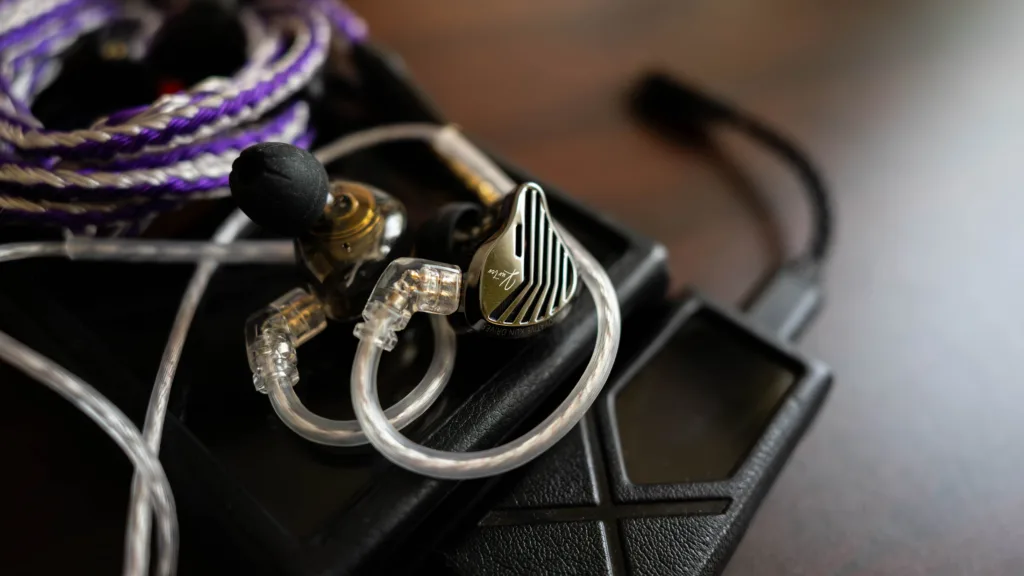
This is where the Kunten shows its weakness: its piercing, high-pitched vocals can come off sharp, but surprisingly keep tonality intact. This is all too obvious in tracks like Allen Stone’s Give You Blue, Bonnie Tyler’s Total Eclipse of The Heart, and Celine Dion’s All By Myself, where the Kunten can be sharp and piercing, yet bearably so.
The Kunten extends and keeps tonality intact. In fact, it handles vocal quality well, and it only shows weakness when the climaxes on the aforementioned tracks hit. It handles all vibratos and modulations effortlessly, and even in a track like Kendrick Lamar’s Alright, the Kunten’s coherence between horns and cymbals shines, as the tonality in the horns stays intact, the background vocals get prominence, and layer very well, which is why I have no problem saying the Kunten has great separation.
Concluding notes
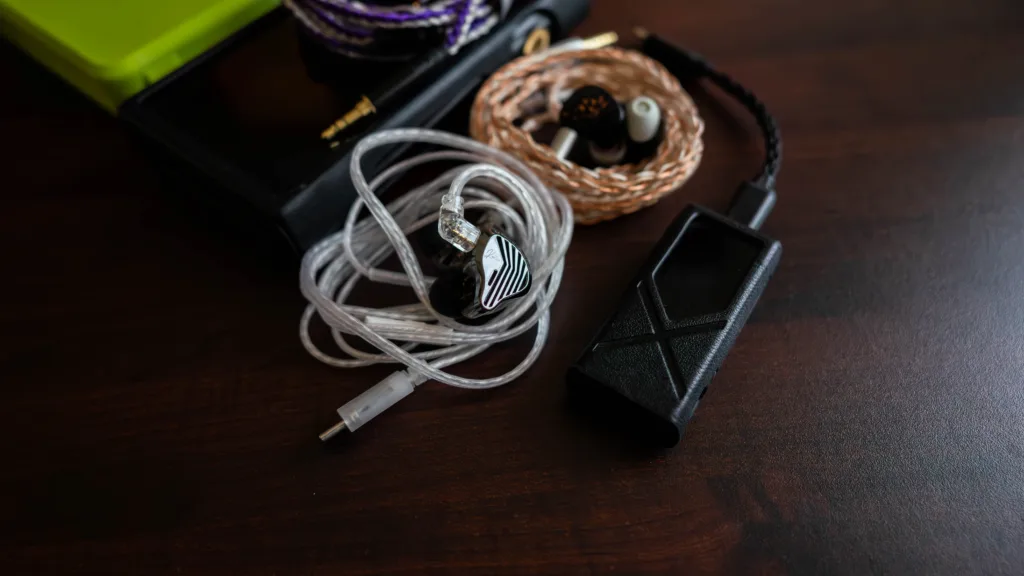
GK Kunten is KZ’s attempt to dish out excellent tuning for the price, after a sea of releases with mostly outdated, sibilant, or rather bad tuning. Given its trackrecord with IEMs like the CCA CRA+ and PR2, the Kunten is another excellent showing, and I could reckon it’s KZ’s best IEM to date.
However, a few IEMs still give tough competition. Notably, the Tanchjim Bunny DSP can be bright but still deliver smooth vocals through pitch shifts (with on-the-fly EQ tweaks via the Tanchjim app), with the bass of a more polished set. It clocks in at $25, providing a fine value. Then again, if I wanted a similar sound but in a bullet-style form factor, the Tanchjim One at the same price does just that.
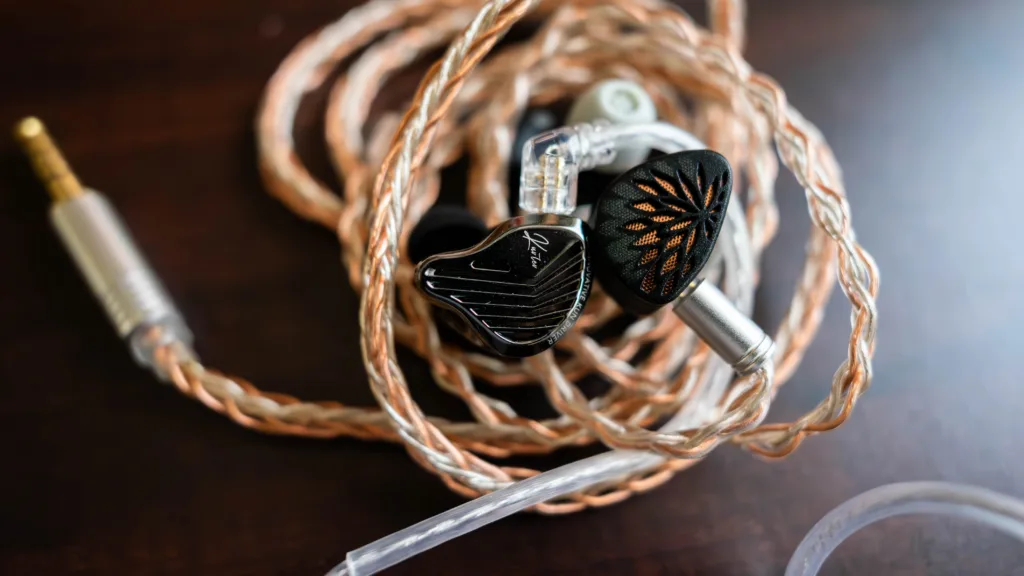
IEMs like the Tangzu Yu Xuanji, which comes in a metal case, are another formidable rival. They sound excellent, have a significantly wider soundstage, and come with three sets of their Sancai balanced eartips to further sweeten the deal, all for $50. This also shows the price disparity in IEMs, where a significant jump can yield a proportional return.
For the price, though, the Kunten are an excellent offering, but it’s definitely not annihilating IEMs priced three-four times higher, especially when the latter offer more value for just a little more money.
Despite some shortcomings, and given how much these IEMs deliver for their incredibly low retail price of $10, I rate the GK Kunten a 9 out of 10.
Will I buy it at retail? Absolutely.
Will I buy it used? Blindly.
Pros
- Powerful, controlled sub-bass that competes far above its price
- Exceptional tuning and performance for $10
- Detailed midrange
- Energetic, engaging sound
- Very comfortable fit
Cons
- Treble can be sharp and piercing, especially with high-pitched vocals
- Energetic tuning can cause fatigue for sensitive listeners
- Basic build
- Slightly metallic timbre
- Outclassed by pricier IEMs
Eartips (in descending order of performance, i.e., best first)
| Moondrop Spring: | Makes the Kunten sound perfect. Treble is smoother by a good margin, bass is slightly reduced, stage opens up, and midrange polishes up further |
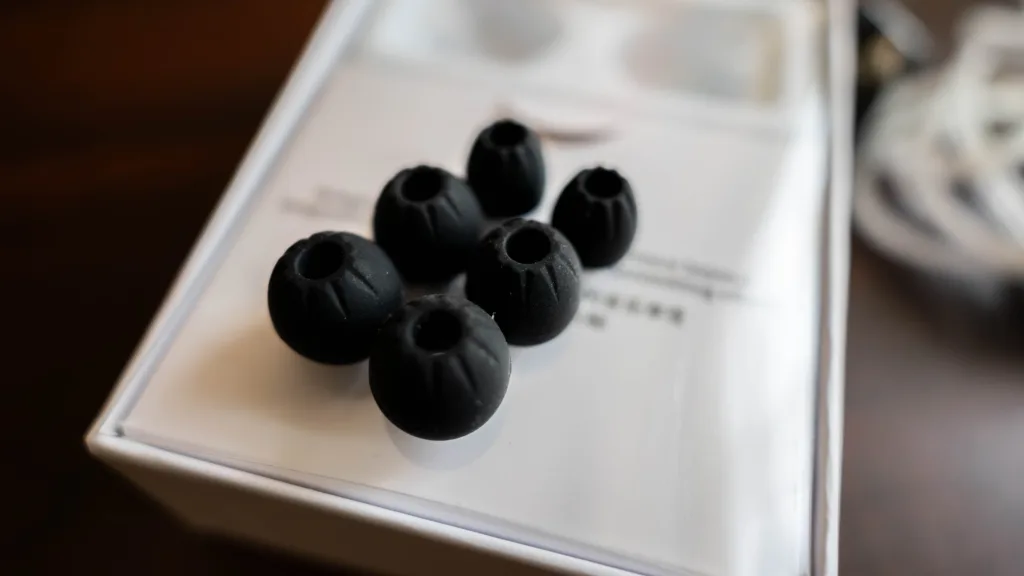
| KZ Starline (supplied): | Shrinks the midrange but improves sub-bass quality, retains detail, keeps instrument separation intact, treble feels fatiguing, and vocals can sound little dry |
| Spinfit CP100+: | Widens the stage at the cost of everything, bass feels too lean, and tonality feels dry |
| KBear Coffee: | Ruins treble to deliver the highest quality bass possible, and improves separation and vocal tonality |
| JVC Spiral Dots: | Muffles the sound completely |
| OEM | Product | Price |
| GK | Kunten | $10 |
GK aimed low with the Kunten and still managed to impress. Its bass and midrange bloom with confidence far beyond the asking price, but the treble occasionally flares and bites, betraying the fragility of its tuning at the edges.
Sources used:
TRN Blackpearl and FiiO KA17 in low gain, Kiwi Ears Allegro Mini, FiiO K5 Pro desktop DAC in medium gain, and the Shanling M9 Plus DAP.