 Matt Sholtz
 After reviewing Wear OS devices for many years, I came away unconvinced of their need beyond exercise tracking. If you’re a health nut, a smartwatch can be indispensable. But if you’re a lazy layabout who works from home and rarely ventures into meatspace where the normies congregate — like me — then really, all a smartwatch is good for is notifications, weather, and, of course, telling the time. This is all I really want out of any smartwatch. I’m a simple man. But one thing that always turned me off was the short battery life. What good is sleep tracking if I have to charge my watch every night? This is why, despite never having owned one of the original Pebble watches, I was always intrigued by the long battery life the e-paper screen offered. So when Pebble pre-orders for the Core 2 Duo (now the Pebble 2 Duo) went live this past March, I was all-in on day one.
I was lucky to have ordered so early, too, as it would appear that many of the old black bodies Pebble planned to use to manufacture its new line of Pebble 2 Duos were somehow damaged during storage. So not everyone who ordered a black Pebble 2 Duo got one, but I did, which is what I’m reviewing.
Now that I’ve had a month to test the e-paper smartwatch, I can say it has lived up to my expectations. It’s a simple smartwatch with a simple feature set — handy for receiving alerts from your phone — with some slick watchfaces, and a boatload of battery life. While I wouldn’t go so far as to call it perfect, there’s something special about the Pebble 2 Duo that it feels both nostalgic and modern at the same time.
Where to buy and specifications
The Pebble 2 Duo was a limited buy, and the store currently says it is sold out. It is unknown if more will be manufactured. This means the aftermarket is your best bet for finding one, and the cost will likely be inflated from the $149 retail price.
| Display: 1.26″ B/W | Linear resonance actuator (vibrator): Yes |
| Resolution: 144×168 pixels, 176 DPI | Battery life: 30 days |
| Interaction: 4 buttons | Connector: Standard Pebble charger |
| Frame: Polycarbonate | Water resistance: IPX8 (target) |
| Dimensions: 39.55 × 30.25 × 10.40 mm | Health features: Step and sleep tracking |
| Sensors: 6-axis IMU, compass, barometer | Strap width: 22mm |
| Mic and speaker: Yes | Apps: Android, iOS |
| Backlight: Yes |
What’s new with the Pebble 2 Duo
Okay, so the Pebble 2 Duo may look exactly like the original Pebble 2, but it features a host of improvements inside. The biggest selling point is the goal of offering 30-day battery life, though at this time, it’s a short-term goal with 17 days claimed as the average. Still, that’s a huge jump over the 7 days of the Pebble 2. Bluetooth is also improved with the upgrade to the nRF52840 SoC. There’s also a speaker included this time around, along with a microphone, and an API is on the roadmap, so devs will be able to tap into their functionality.
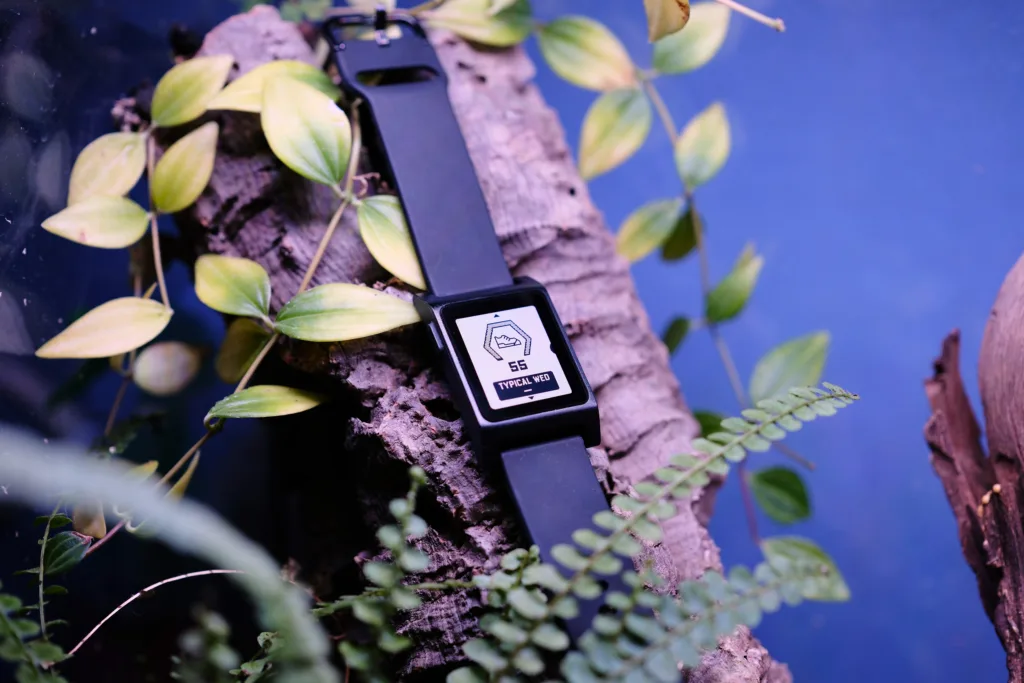
It would seem the old vibration motor has been swapped out for a linear resonance actuator, which is claimed to be quieter and stronger, and I can say the strength is plenty noticeable. There is now a barometer, a compass, and the water resistance has been bumped up to IPX8. Oh, and the buttons have been revisited — now stronger and longer-lasting, which might explain why they feel so stiff (more on that later).
Not everything is an improvement, thought. This time around, there is no heart-rate sensor. This means the watch faces that support heart-rate sensors won’t be able to display that data. While you’ll still be able to track things like steps and sleep thanks to the accelerometer, tracking your workouts may be less precise.
The display and design are both functional and pleasing
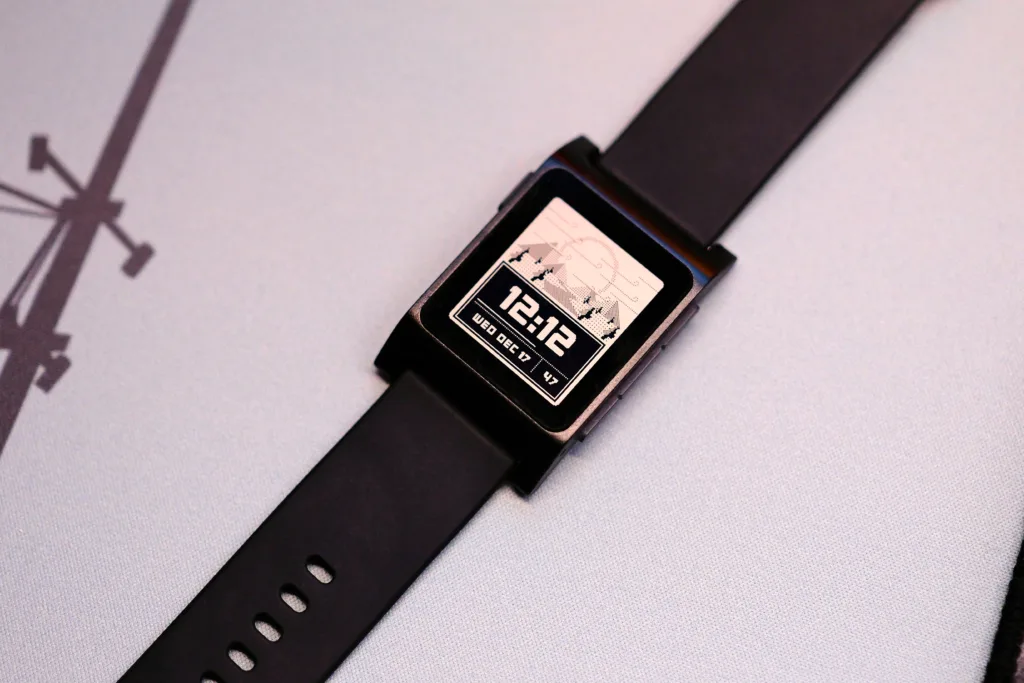
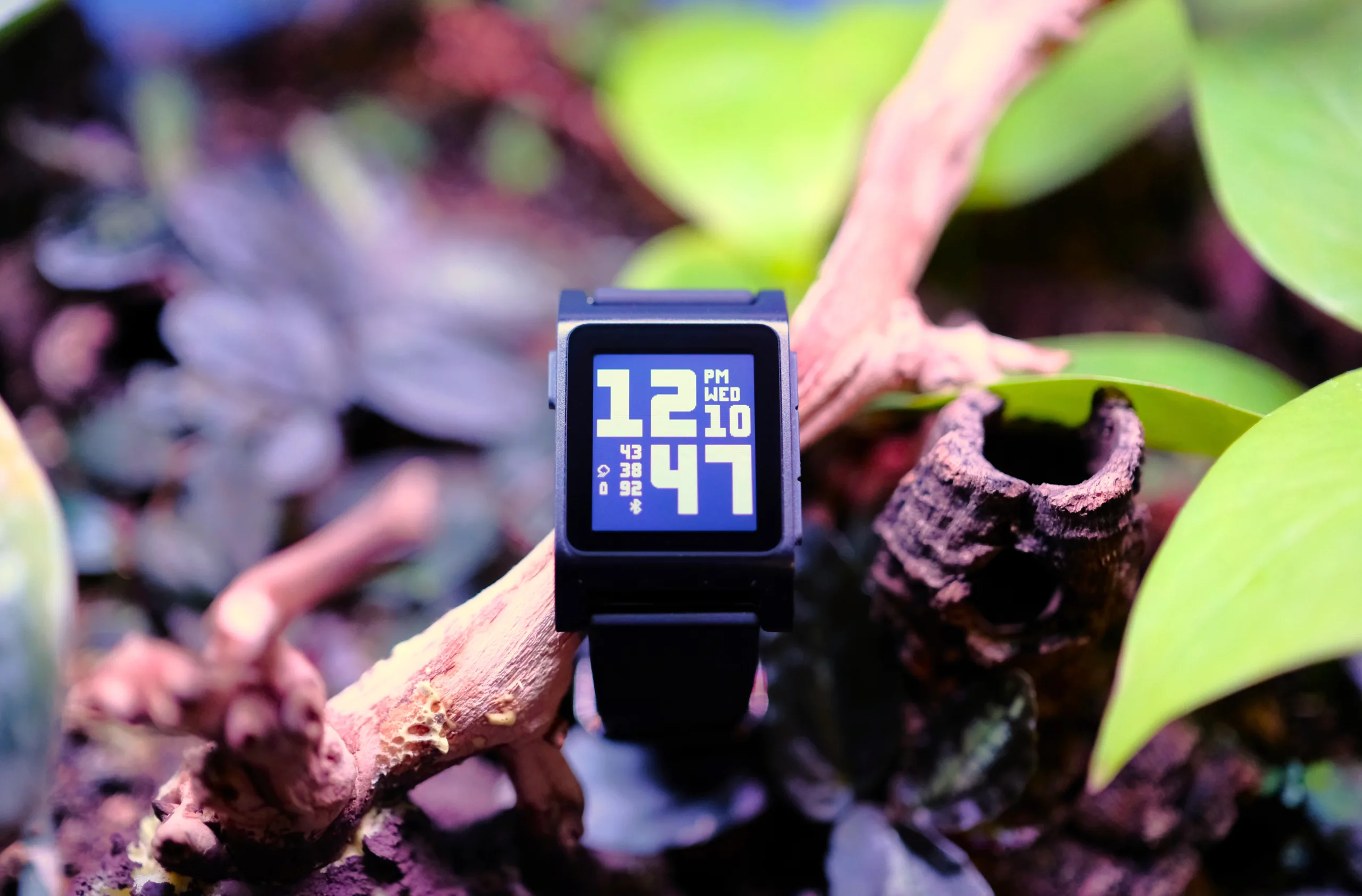
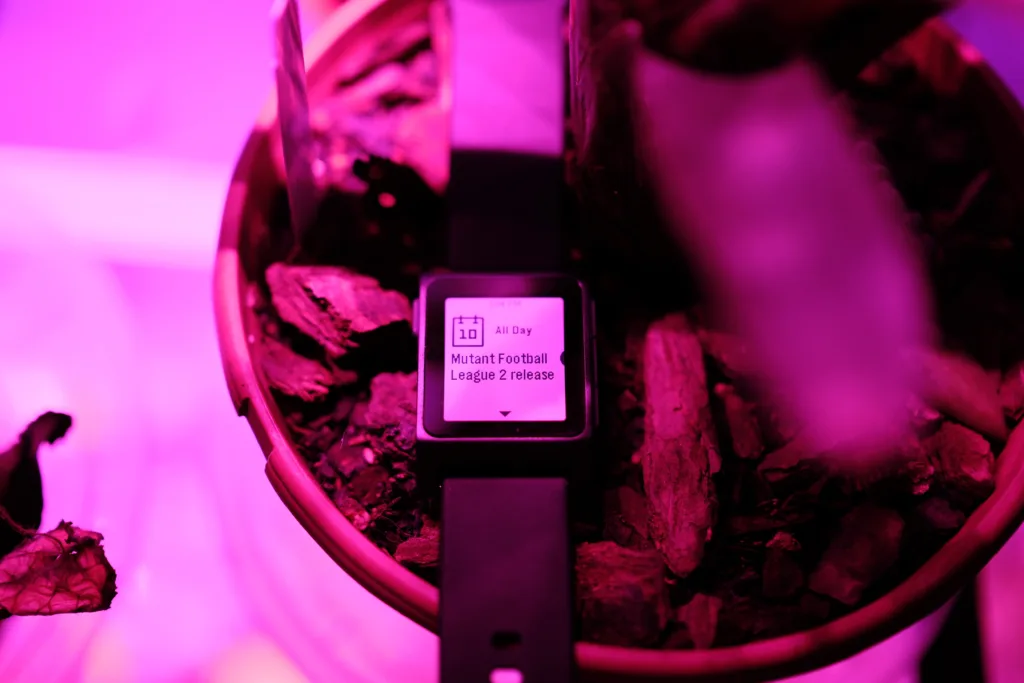
The primary reason I was eager to get my hands on the Pebble 2 Duo was its e-paper screen. So far, I’m pretty impressed with the 1.26-inch black-and-white Sharp Memory LCD display. It refreshes quickly at 30fps, there’s no noticeable ghosting, and the lighting is plenty even. The screen does what it was designed to do, and looks good doing it. That’s all I could ask, really; the experience works as advertised.
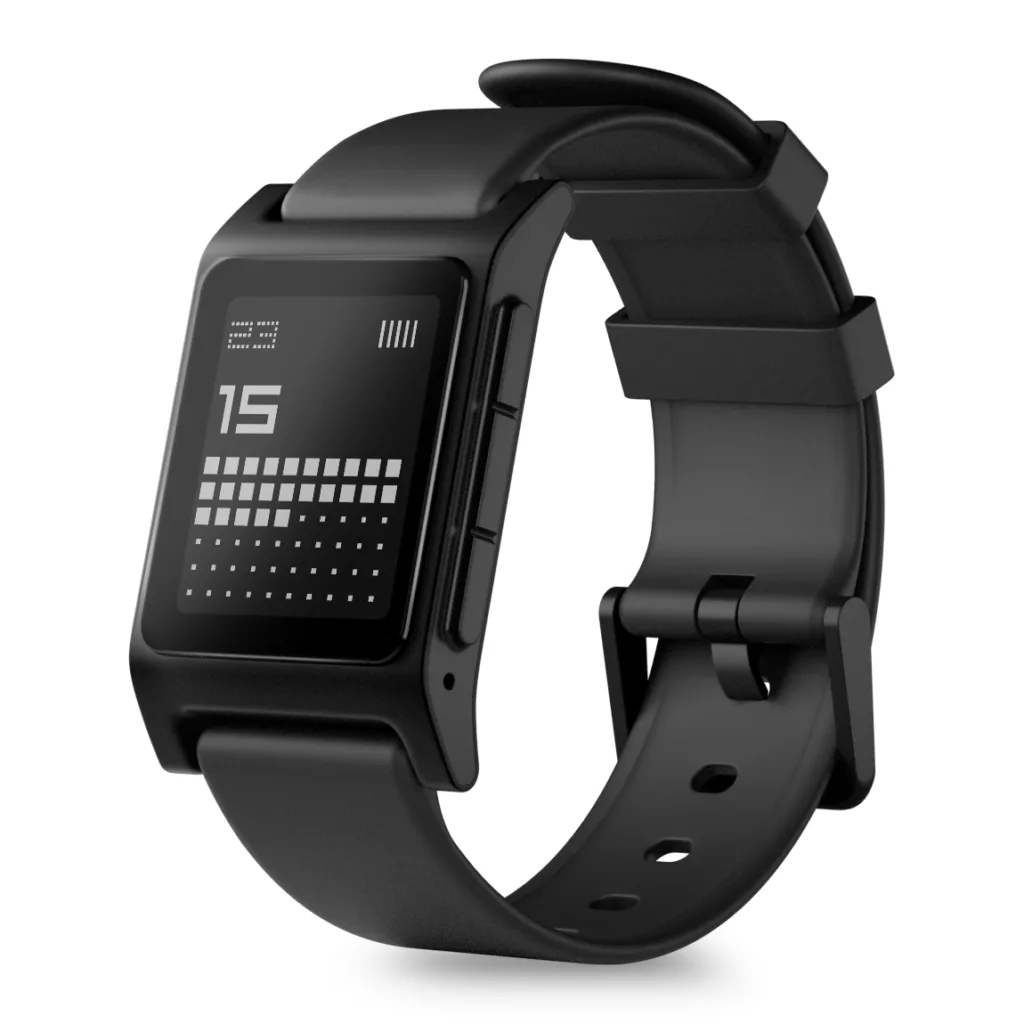
The body of the Pebble 2 Duo remains similar to the original Pebble 2. It’s a little blocky. But really, the reason it looks like the Pebble 2 is because it’s actually using a leftover Pebble 2 body that had been sitting in storage for years. This is also why not everybody who ordered the black Pebble 2 Duo received one; some of those old bodies were damaged. Still, this means if your Pebble 2 Duo buttons or body break, you can replace them with third-party parts, since the design has been around for years.
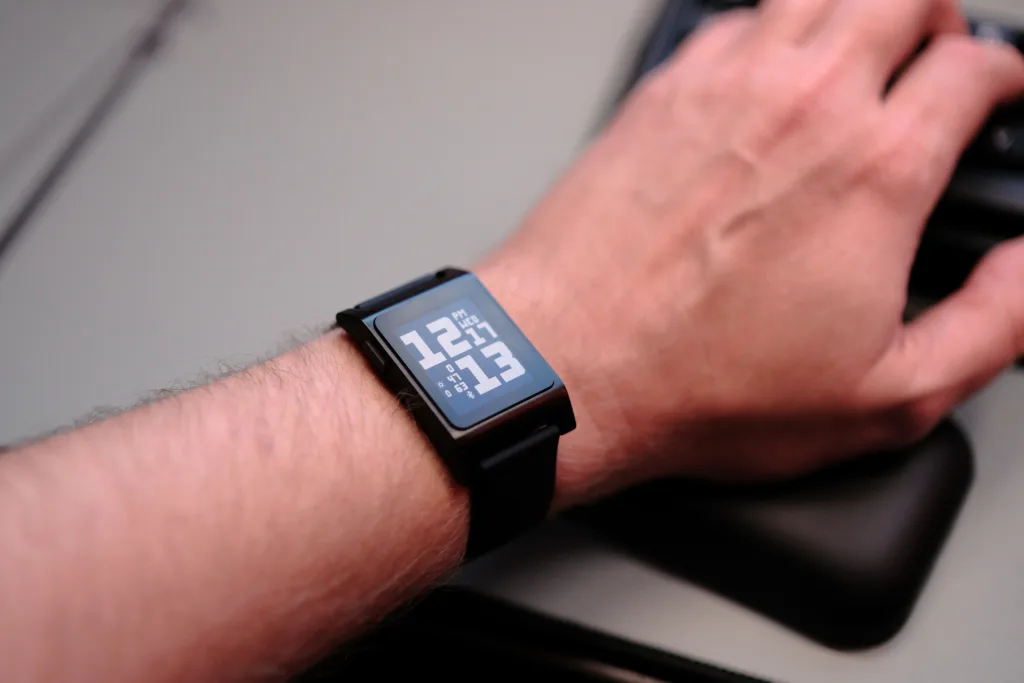
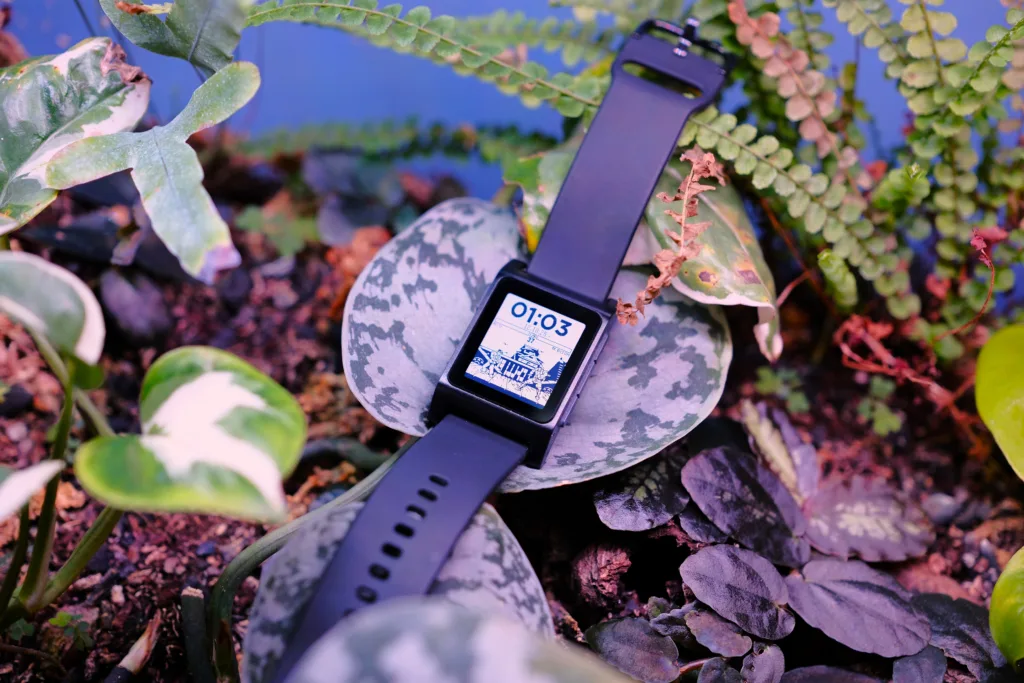
Whether you choose the white or black model, the body is made of polycarbonate, a fairly light material that ensures the smartwatch won’t weigh you down when worn all day, which is precisely what it was designed to do. The buttons tout 30% more longevity over the older options of the original Pebble 2; however, some users are already noticing degradation, so it seems mileage varies. I’ve also noticed that the buttons are really stiff, which could cause you to accidentally dig your fingernail into the soft TPU and damage it.
The 22mm band that ships with the watch is silicone, and while it functions correctly, I do find it rubs the hair on my arm, uncomfortably so. So I bought a band from Amazon that offers a bit more of my style, and is a lot more comfortable, and that’s the beauty of easily replaceable bands, you can change them up at any time. Nothing proprietary to worry about (unlike some brands), which leans into the Pebble 2 Duo’s general openness.
The software and app experience is fairly fleshed out
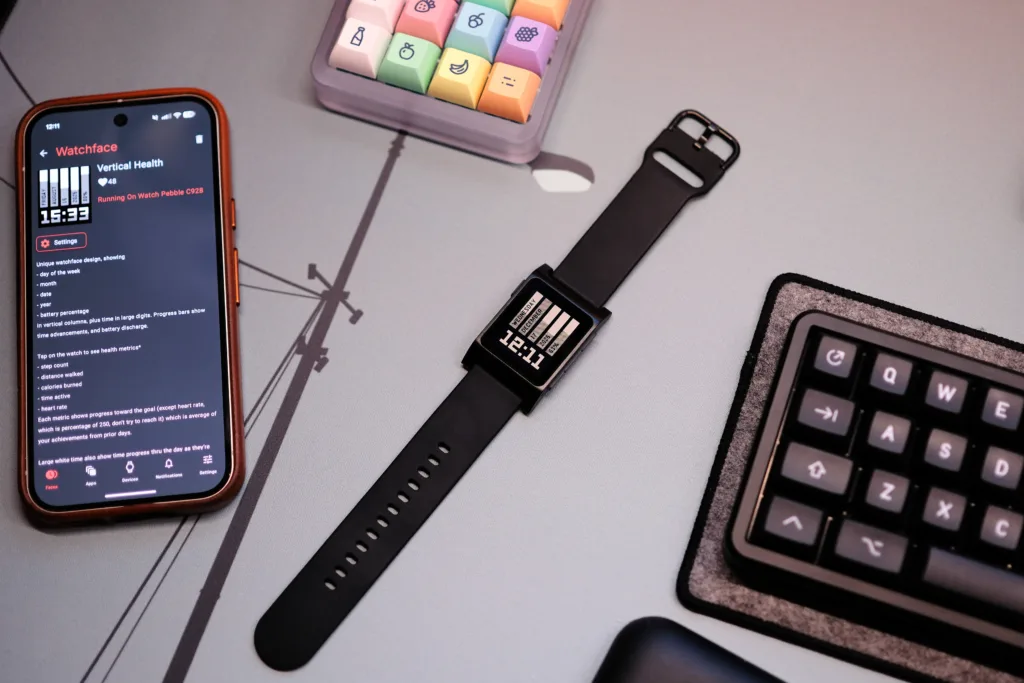
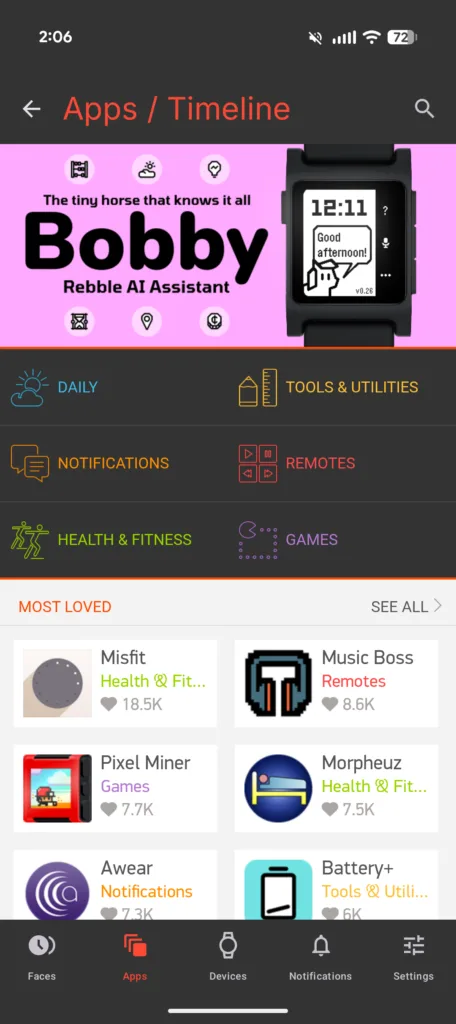
Pebble’s app is available for Android and iOS, not to be confused with the old app that was long removed from the stores. The old app won’t work with the 2 Duo, but you can sign in to your Rebble account in the new Pebble app to use its app selection over Pebble’s. Sadly, the new Pebble app requires Google Play Services to function, so, despite Pebble’s software now being fully open source, there is no official way to use the Pebble app on a deGoogled Android device. The good news is that the third-party open-source app Gadgetbridge supports syncing with the 2 Duo. While it offers fewer features than the official Pebble app, it works well enough for anyone who prefers to live their life without Google spying on them. You can even use Gadgetbridge to sideload new watch faces to the watch.
Still, the Pebble app is the official app, and in order to future-proof the selection of apps and watch faces on the store, there is a public backup. The app even supports multiple feeds, so should Pebble fall once again, the community can easily take up the mantle to keep things running, which is always lovely to see.
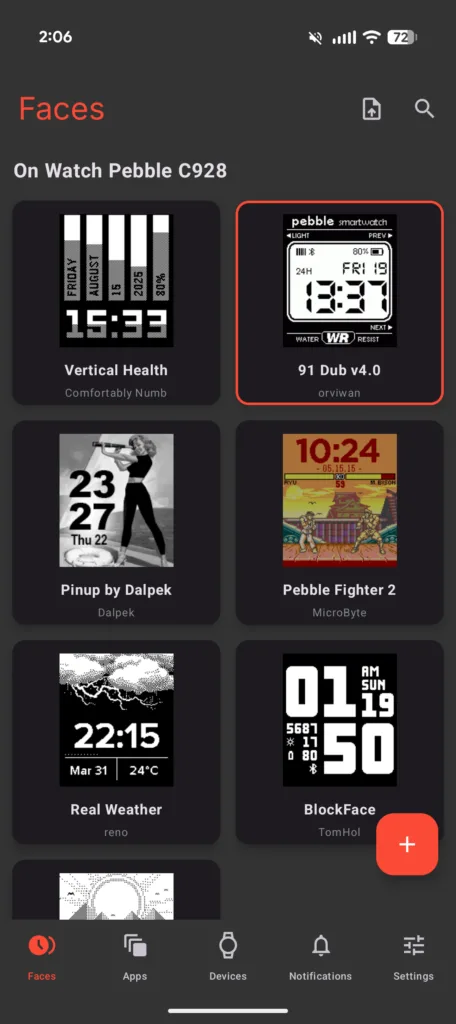

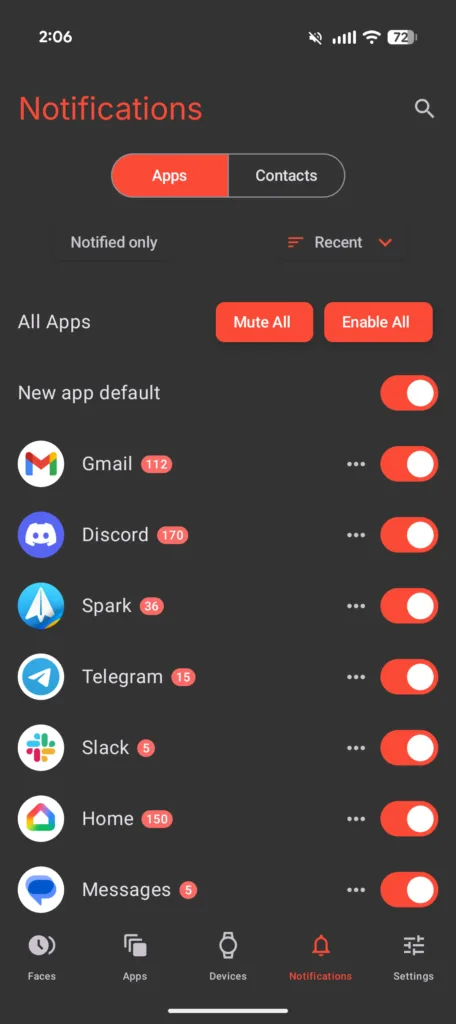
Now, as far as the watch’s inbuilt software goes, it’s a little barebones, but I’d say this leans into the watch’s minimalism and its company’s ethos. In other words, I find the software perfect for my needs. You can track your steps, your sleep, and your workouts. That’s about it. There is no heart rate sensor, so sleep tracking is done using the accelerometer. You can basically lie still watching TV, and the device will think you are sleeping. Suffice it to say, I find sleep tracking somewhat inaccurate, but some improvements have been made with updates to be less sensitive, so your mileage may vary.
More or less, the software works fine for my use case, where I leave my phone on silent to receive all my notifications on my wrist. From here, I can decide whether to respond to a notification, and on what platform, like my phone, a tablet, or a laptop. Basically, I use the Pebble 2 Duo as a glorified notification machine, with the benefit of tracking my steps and infrequent workouts like a typical smartwatch.
Battery life is phenomenal and set to get even better
Pebble currently claims that users will get 17 days out of their Duo 2, and I can say my testing lines up with that claim, even beating it at around 20 days of life on average. I’m not alone either. While 20 days is plenty good, the plan is to get the watch to a full 30 days, which will be phenomenal if it is reached.
While I’m definitely pleased with the battery life we get right now, there’s no doubt adding even more time to the lifespan will be a huge boon, especially if you’re into tracking your sleep. While I wasn’t incredibly impressed with the functionality, the more nights you can track without taking the watch off to charge it is clearly a win.
The Pebble 2 Duo may be simple, but that’s the appeal
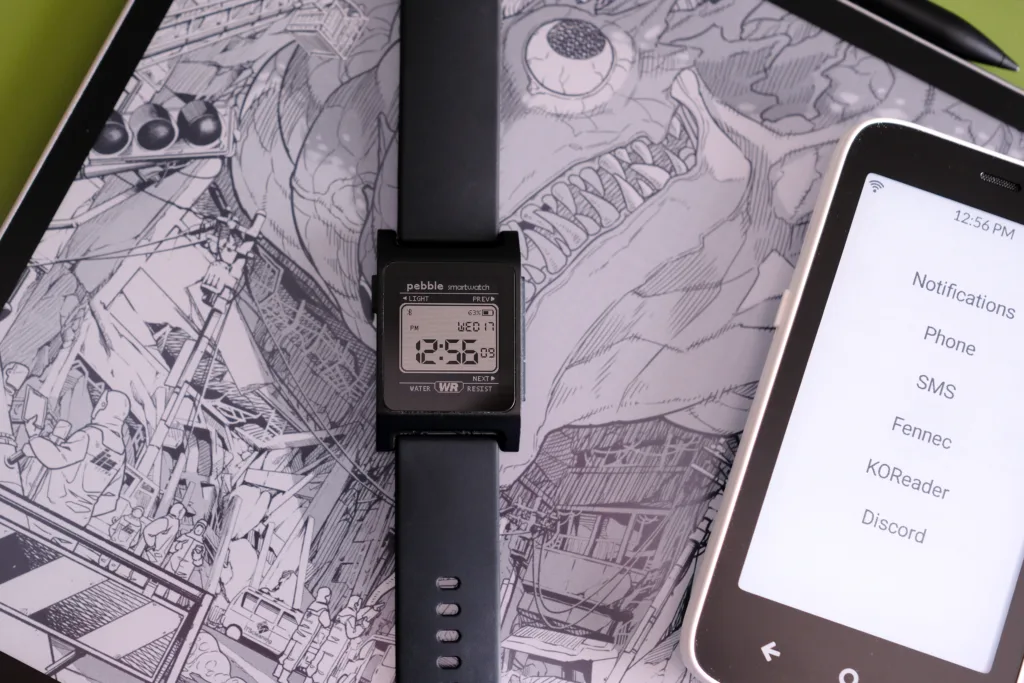
I’m incredibly pleased with my Pebble 2 Duo, if you couldn’t tell. Of course, I knew what I was getting into when I pre-ordered a year ago, that the polycarbonate black case was a leftover from the original Pebble 2 that had been sitting in storage for years, which also means it contains all of its flaws, like a button design that can deteriorate, and a case that may crack. The Pebble 2 Duo will need to be babied a little, which probably isn’t something anyone spending $149 on a smartwatch wants to hear. But at the end of the day, it’s slim pickings when it comes to e-paper smartwatches, especially those as well-established as the Pebble ecosystem.
My goal with the Pebble 2 Duo was always to use it as a notification device for my silenced Android phone, and I can confidently say it works superbly as such. Now I’m no longer tied to my phone, which is pretty freeing, since I no longer feel the urge to pick it up at every beep and boop. Plus, I can track my steps, my sleep, and my exercises. While this isn’t new territory for a smartwatch, when you combine these simple functions with incredible battery life, well, for me, that’s a total game-changer. As someone who has never been truly sold on the usefulness of smartwatches, the Pebble 2 Duo is the first device to convince me otherwise.
Pros
- Battery for weeks
- Responsive and clear screen
- Available aftermarket parts
Cons
- Buttons are stiff
- Sleep tracking could be more accurate
- Not the easiest to repair
| OEM | Model | Price |
| Pebble | Pebble 2 Duo | $149 |
The Pebble 2 Duo delivers what was promised, a smartwatch that’s great for notifications and battery that lasts weeks at a time. While it isn’t the easiest to repair, there are parts available on the market, and there is a large enthusiast community and readily available documentation thanks to its open-source nature.