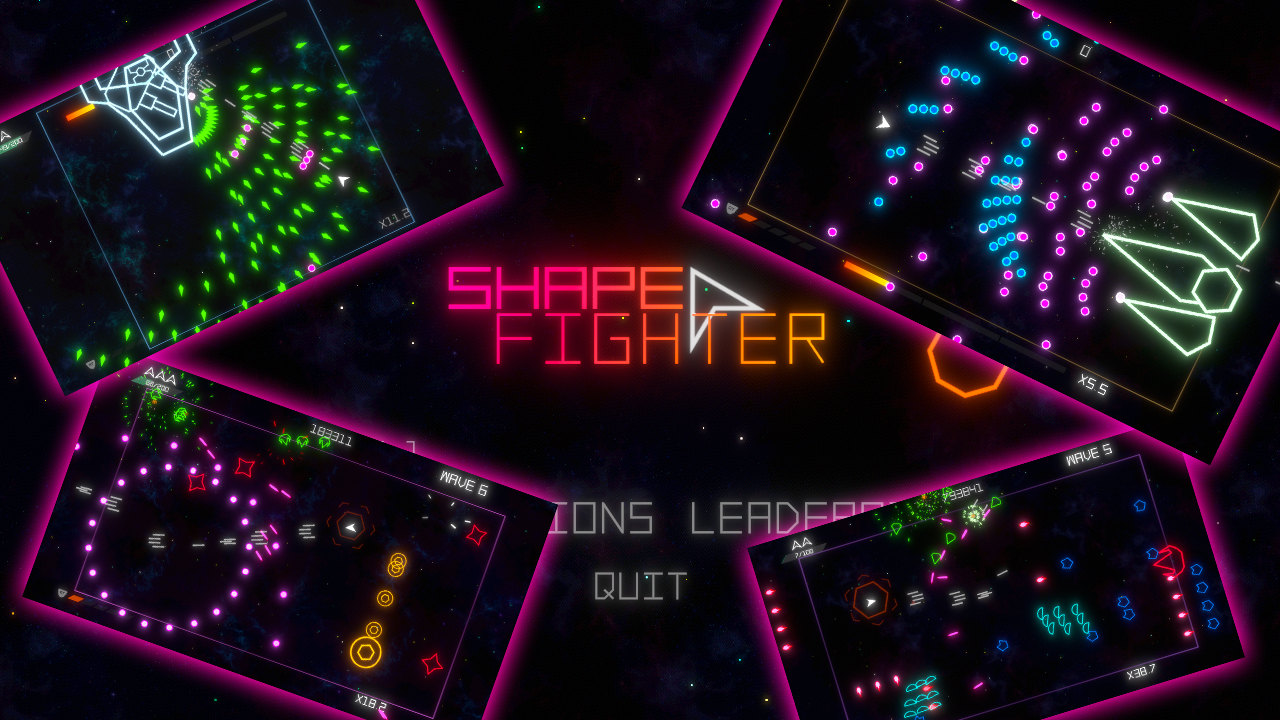

Back when the Xbox 360 was the cutting edge of video game technology, Geometry Wars: Retro Evolved was my jam. Although I could never unlock all of the achievements, I would invest hours pushing myself as far as possible. No matter how many times I played or how often I died, the game was always a joy to pick up. Shapefighter, an unambiguous love letter to Geometry Wars, doesn’t have that same charm, but it comes really close.
Shapefighter offers the classic vibe I crave
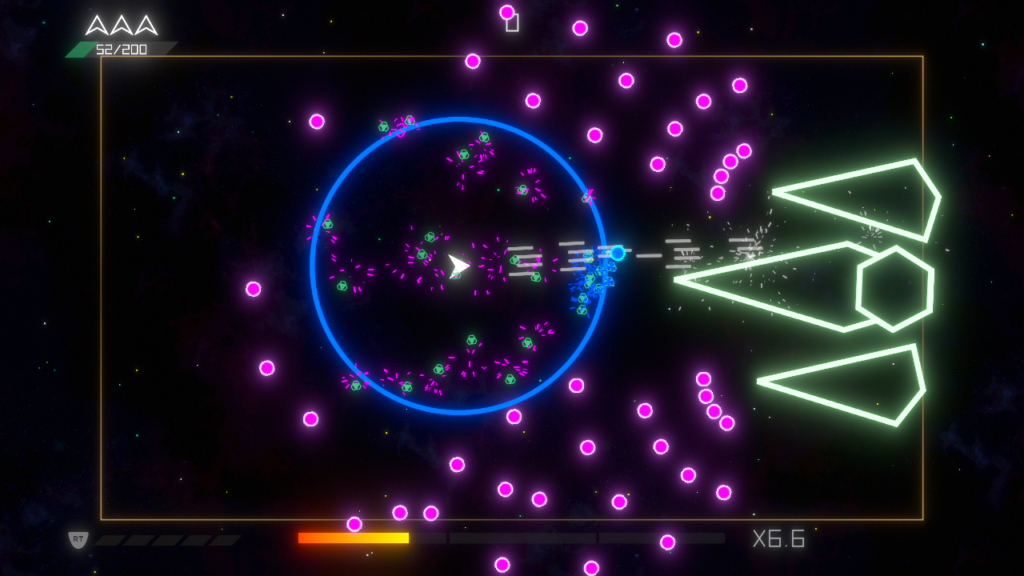
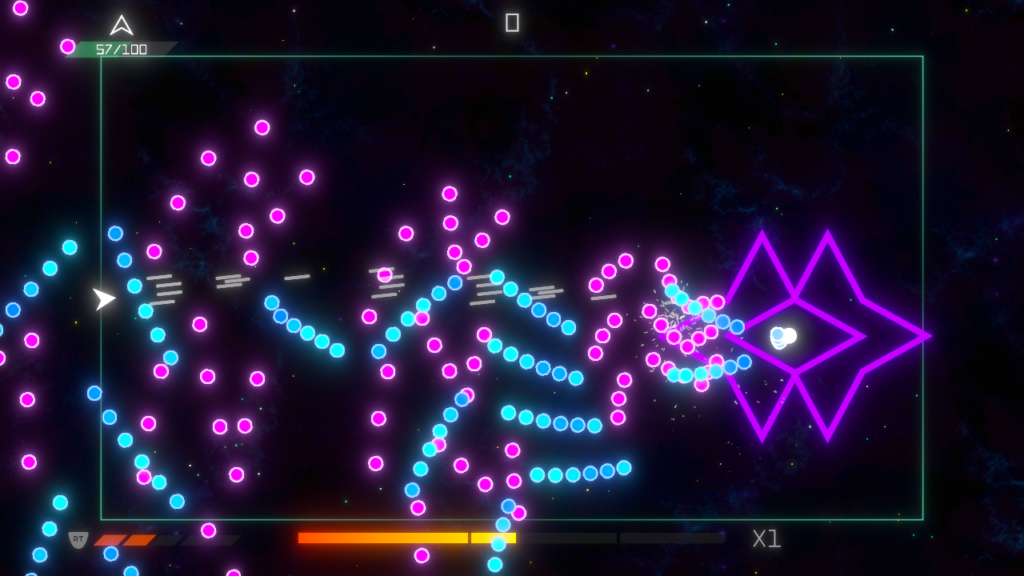
Despite any other flaws I might find with the game, when it comes to nailing that Geometry Wars vibe, Shapefighter delivers. From the glowing neon lines of the sprites to the oppressive swarms of mobs, this feels like Geometry Wars from the moment you start playing. The controls are essentially the same as well — left stick to move, right stick to shoot. The left trigger will slow your movement down slightly (useful for navigating the bullet waves during boss fights), and the right trigger either drops a screen-clearing bomb (if your capacity is maxed) or throws up a bullet-blocking shield.
Another thing that Shapefighter gets oh-so-right is the music. Here again, developer oatware is borrowing a page from Geometry War’s playbook by setting its stylistic space shooter to a thumping techno beat. But just as the gameplay is tweaked from the original, so too is the sound design. Whereas Geometry Wars had a repeated techno track for its single infinite level, Shapefighter has multiple levels, and it changes its music slightly for each one, often using its soundtrack to set a mood or tweak your tension, particularly during boss fights. Simply put: The music is top-tier.
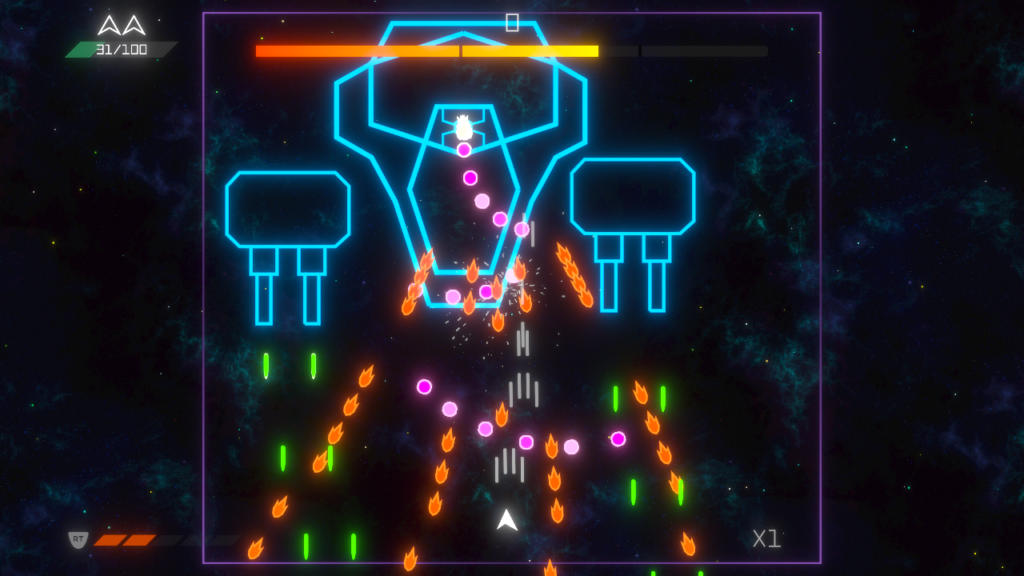
Gameplay is very similar to what you’d expect: move in any direction, shoot in any direction, don’t die. Where Shapefighter deviates from Geometry Wars is that the enemies shoot back, which brings in the bullet-hell aspect of the game. And true to bullet-hell form, there are bosses you have to defeat, in this case, after every fifth wave. As someone who doesn’t play Touhou or shmups in general, the bosses are a pain in the ass, but I grudgingly admit that there is a type of joy to be found in figuring out their patterns and learning how to beat them.
Where things start to go wrong
One thing that gets under my skin is when a game neglects to explain itself. With a title like this, so clearly being an homage to an earlier game, a lot of gameplay details are obvious: move, shoot, bomb. What’s not obvious at first glance are the triggers for the game’s events. The bosses have a health bar, which is easy to pick up on, but how do you know how long it takes to clear a level, or what triggers an extra bomb or extra life?
I figured out the first two, but I still don’t know how to get extra lives. I do know that they only seem to show up during boss fights. The only time I managed to beat the level 2 boss, I got three of them; other runs, I didn’t get any. If I want to repeat my sole victory, it would help to know what I did right.

Another issue I have with Shapefighter is the respawn system. Dying is a part of playing video games, but for the love of all that is sacred, don’t spawn me under bullets. When you die in Shapefighter, you’re automatically respawned at the center of the screen. During non-boss waves, all the enemies will be cleared when you die, but they can respawn faster than you — fast enough to get off shots before you’re fully back in the game.
During boss fights, it’s even worse. Their firing pattern doesn’t stop when you die, so it’s not uncommon to respawn in the middle of a bullet curtain. Yes, you start every new life with two bullet-shielding bombs and a second or two of grace, but I shouldn’t be obliged to use my shield when I respawn.
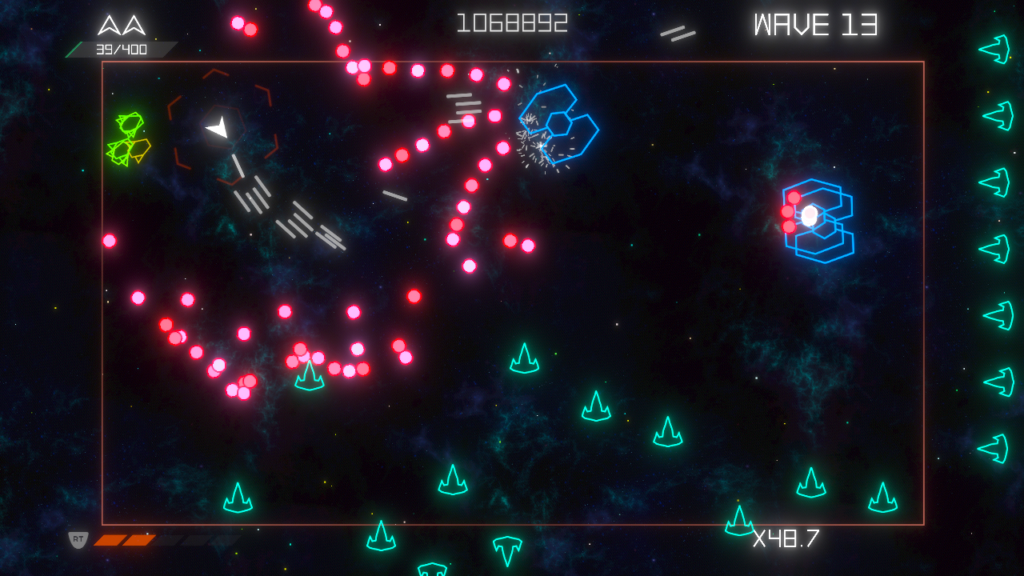
My final criticism is that despite all of the bright, vivid colors in the game, I can’t see a pattern behind them. When things start to get crazy, I often confuse bullets for baddies because there’s no real design rule distinguishing the two. When there are blue ships and blue bullets flying around, I don’t want to try and shoot my way out of a hail of bullets. Maybe I’m just a filthy casual here, but I feel like if a game is meant to be punishingly hard, concessions like these balance some of the difficulty out.
When is a game too hard?
I grant that bullet-hell shooters aren’t supposed to be easy, but the jolt of euphoria I got from finally beating the second boss was accompanied by a brief wave of relief, which was followed by dread at the thought of having to do it all over again. Even though you can jump ahead to a previous level, you won’t earn any achievements unless you start from level 1. Thankfully, any forward progress you make while jumping ahead will be preserved, so you could conceivably grind out the whole game that way, just with nothing to show for it.
Judging from the achievements for Shapefighter, I have to conclude that it was made for passionate fans of the shmup genre with lots of experience under their belts, because it all feels far beyond my reach. More than anything, perhaps that’s where Shapefighter misses the mark — I rarely feel like I’m getting better. And with my lack of an emotional connection to the bullet-hell genre, the intrinsic rewards of a good run aren’t enough to sustain me, and there are no extrinsic rewards (“casual” achievements) to make me feel like I’ve done more than die 100 times. Now, if you’ll excuse me, I’m going to do another run …
| Developer | Genre | Price |
| oatware | Twin-stick bullet hell | $4.99 |
This game triggers my anxiety and raises my heart rate, but despite how much it pisses me off, I keep coming back for another run. There’s something here, but it’s not quite fully cooked.