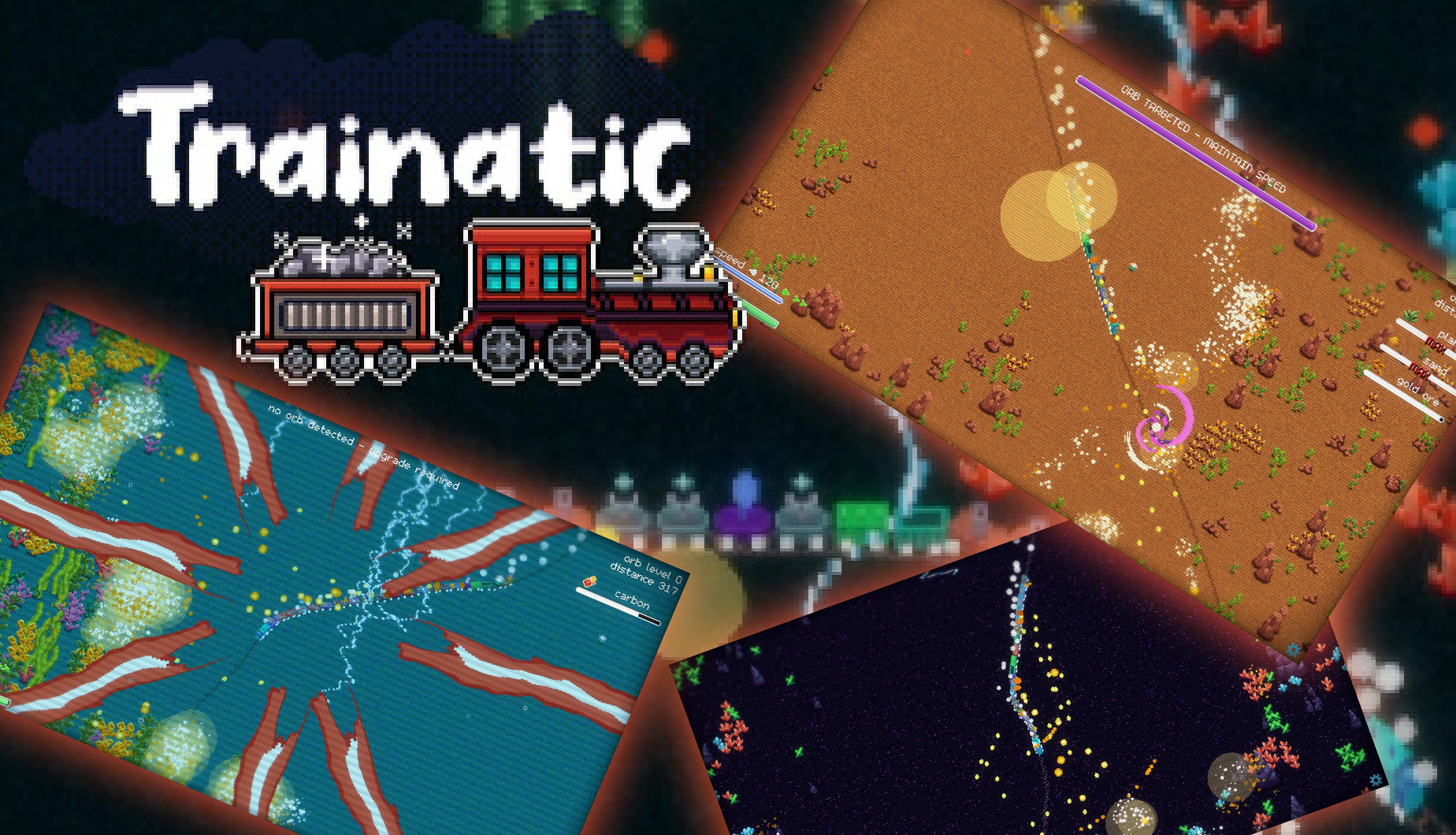

Between games like Troleu and the upcoming Denshattack!, it’s fair to say that train games are having a moment in the sun. Sharing that spotlight is a little game (it takes around 6 hours to “beat”) from indie developer Ryan Forrester that’s all about building a train car by car and pushing it as far as it can go. There’s a lot of awesomesauce to be found in Trainatic’s idle clicker gameplay, but it can’t seem to help getting in its own way, particularly in the late game.
Trainatic is genre-bashing fun, until it isn’t
Before we can talk about where Trainatic succeeds and where it misses the mark, we have to talk about what it is. At its core, Trainatic is a game about building a train. What are you building it for? That’s never made clear, but to accomplish your train-building ambitions, you’re going to need resources. Lots of resources.
Trainatic is best when it’s about growth and discovery
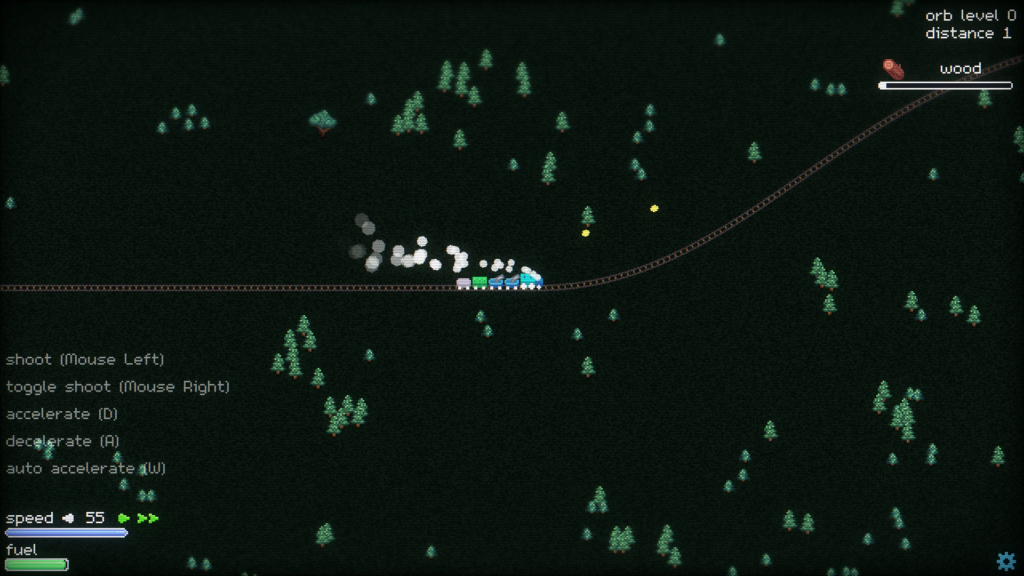
Your basic goal is to build a train that’s fast enough to catch up to a purple swirling hurricane-looking “orb” that will allow you to progress to the next level. To do that, you’ll need to collect resources (wood and stone on the first map) to upgrade your fuel capacity and top speed. You’ll also need to upgrade your weapons because the way to gather resources in Trainatic is by shooting them. Oh, and those resources have a tendency to appear on the tracks, so you’ll probably need to upgrade your armor.
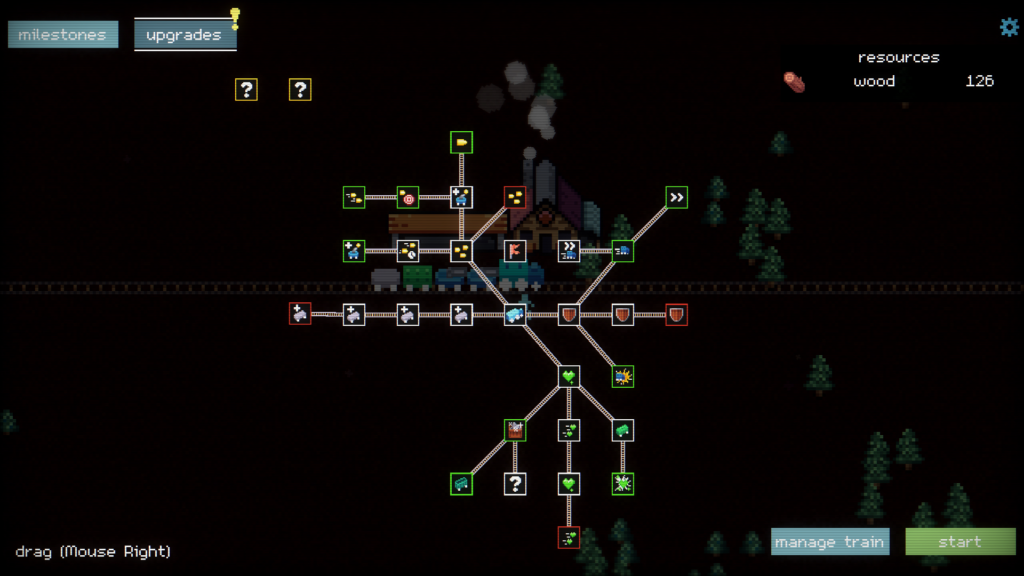
For me, this is the best of what Trainatic has to offer. Upgrading your train basically involves opening up an enormous skill tree that doesn’t quite match Final Fantasy X’s sphere grid, but it comes close. The first time I scrolled out on the upgrade screen and saw how much space there was to fill, I got a little bit excited. It’s also laid out like a railway map, where each skill is like a little train stop, which is a very nice touch.
A feeling of growth is a huge motivator for me in general, and the Trainatic early game really delivers on this. There’s nothing quite like the sensation of seeing a game open up before you, and honestly, even after going through the main game, starting over still has that same sense of potential, growth, and earned progression. Despite my upcoming gripes, I still had to force myself to stop playing a new game just to write this review.
Trainatic is worst when it’s about grinding resources
Where things took a turn for me was in the late game. There comes a point in your journey to collect as many natural resources as possible that you become so overpowered with weaponry that you’re essentially a rolling ecological disaster — nothing can stand in your way. This is fun for a while in the same way that the endgame for Vampire Survivors is fun, but in Trainatic, this is where it turns into a grind. Whereas before there was a sense of growth, discovery, and exploration, now you’re just trying to meet a quota to buy an upgrade to reach your goal.
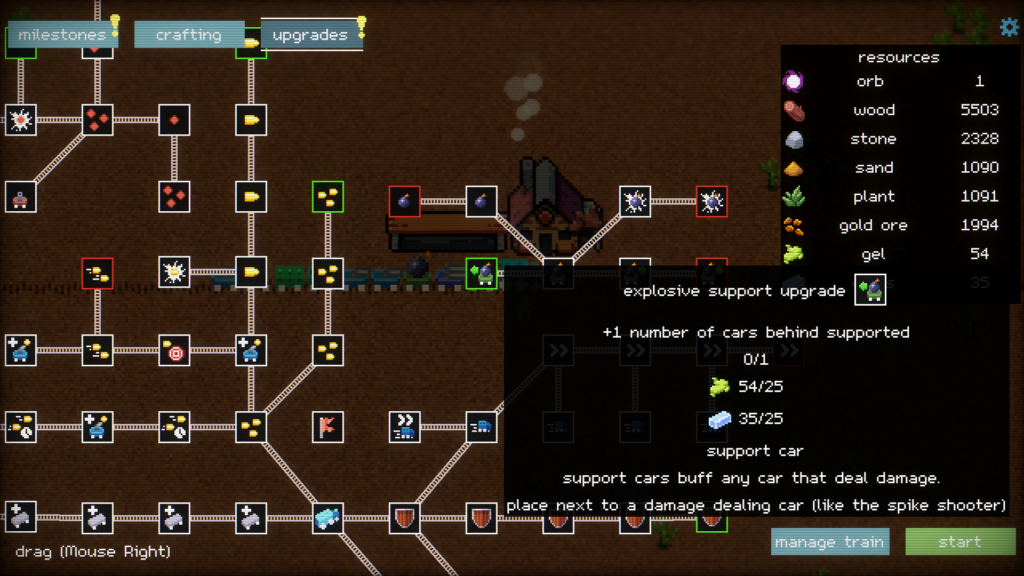
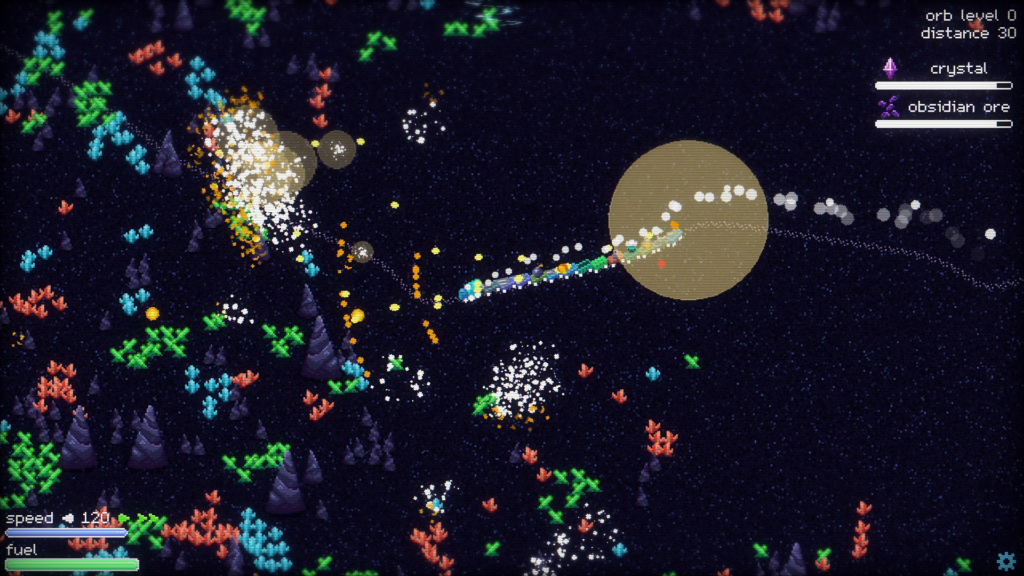
I understand that this is precisely what some players are looking for in their idle games, but it wasn’t for me. I found myself letting things run on their own while I played with my phone. I was racking up massive resources, but I wasn’t doing anything. Besides grinding resources and unlocking late-game skills, the only thing you can do after a certain point is min-maxing the arrangement of your train cars. If that’s your cup of tea, have at it, but I didn’t derive any intrinsic joy from it; I demand more from my clickers.
Yeah, but how does Trainatic look and sound?
Graphically, Trainatic looks like a combination of everything from the PlayStation to the Atari 2600. The backgrounds have a 16-bit Super Nintendo feel to them, while the Station menu looks 8-bit. One of the late-game weapons looks like it belongs in a Dreamcast title, yet the train itself could be from a Colecovision game. In general, I don’t like mixed resolution sprites in my video games (I think it looks sloppy), but for the most part, the aesthetic works in Trainatic and doesn’t distract from what you’re doing.
With the amount of things that are moving on screen towards the end of the game, there’s probably a reason that the graphics are simple and the sprites are limited, because things can get hectic. At some points, there’s so much happening on screen that you’re almost guaranteed to lose your cursor amidst the chaos. Whatever the reason for the pixel-core graphics, the “kinetic” portion of the game plays wonderfully with no stuttering on my Covid-era PC with a 2060 graphics card.
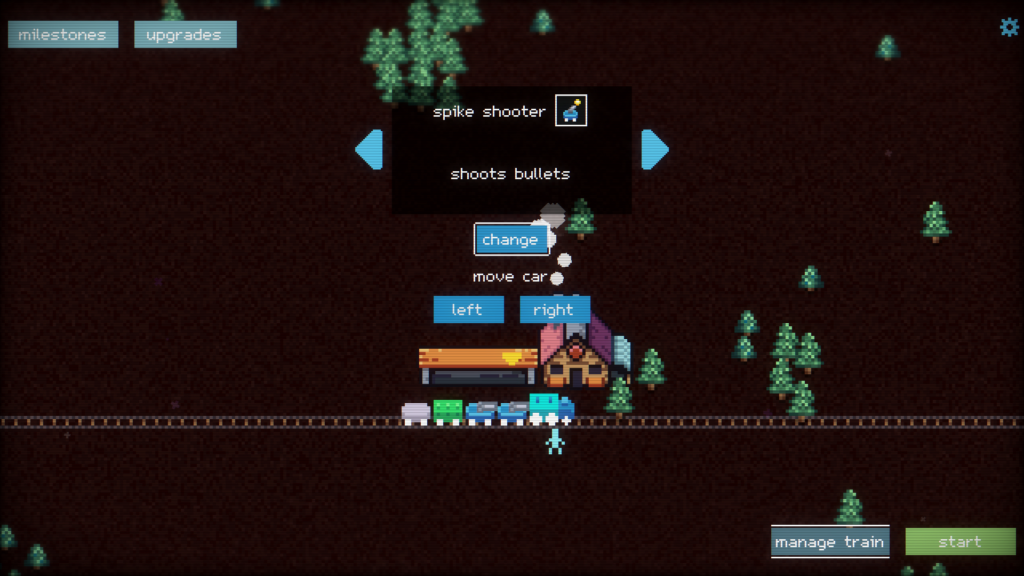
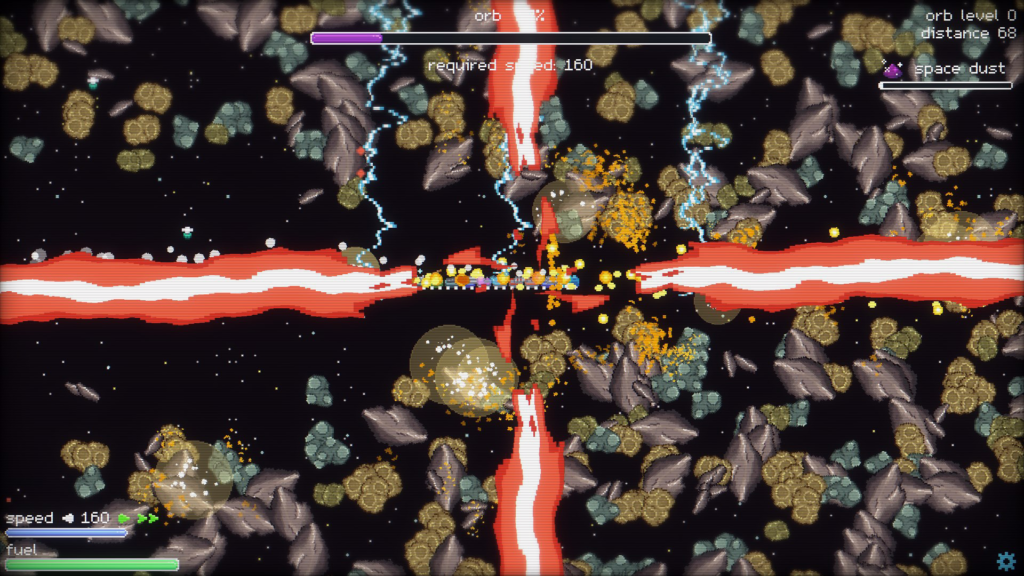
The sound design is also decent. The weapon sounds can get repetitive towards the end of the game when your train turns into Greenpeace’s worst nightmare, but before that happens, shooting and impacts have a nice feel to them. Underneath it all is a chill song that wouldn’t be out of place in an elevator or doctor’s office.
Should you buy a ticket to Trainatic?
Look, the end-game grind on Trainatic suuuuucks, at least it did for me. There’s no light at the end of the tunnel when it comes to a payoff for the time you put in, but there’s something to be said here for the journey being more rewarding than the destination. There’s a spark of something special here, and I’d argue Trainatic is worth the $5 asking price, but ultimately, this train is still missing a few cars.
| Developer | Genre | Price |
| Ryan Forrester | Idle clilcker | $4.79 |
At the end of the day, Trainatic is less a game and more a collection of gameplay mechanics in a trenchcoat pretending to be a game, but it has a spark of magic to it that still makes it a lot of fun to sit down with and play (particularly the early game). It’s not for everyone, but at just $5, it might be for you.